.jpg)


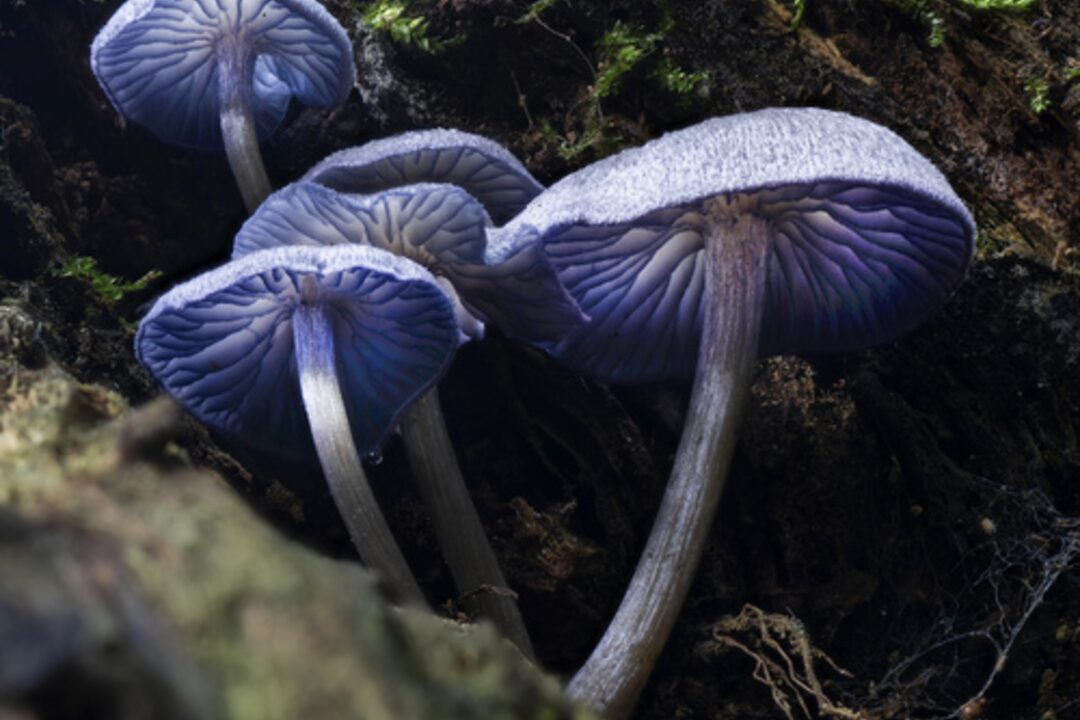
Leptonia mushrooms grow across the damp floor of Usal Redwood Forest, and most are never identified past the genus level. The one pictured here, a deep purple cap with the telltale pink spore print, belongs to a group researchers are still working to sort out.
What Is a Pink Leptonia?
A Leptonia is a small, pink spored mushroom in the Entolomataceae family, part of a group of more than a hundred described species worldwide, according to the Encyclopedia of Life. The cap is thin and fragile, often dark blue, purple, or grey, and the stem snaps easily underfoot. Its common name comes from the color of its spore print, the dust of reproductive cells the mushroom leaves behind, which is a defining trait of the genus rather than a description of the cap itself. According to taxonomic records for the genus, recent DNA analysis has redefined which species belong under the Leptonia name at all, and the classification is still being revised as researchers examine more specimens. Distinguishing one Leptonia species from another usually requires examining spores under a microscope, which is why field photographs like this one are typically logged only to genus rather than a full species name.
What Role Does the Pink Leptonia Play in Usal's Forest Floor?
Leptonia mushrooms are saprotrophic, meaning they break down dead organic matter rather than feeding on living plants, and that decomposition work feeds the next generation of redwoods. Growing directly from the soil, they help convert fallen needles, bark, and wood into nutrients the forest floor can reuse. This happens mostly out of sight, inside the same leaf litter and duff layer that hosts salamanders, invertebrates, and the fine root systems of the trees above. Redwood forests support hundreds of documented macro fungi species, from bright, conspicuous soil dwellers like this one to inconspicuous wood decayers that never produce a visible mushroom at all. A forest floor with an active fungal community is a forest floor that is rebuilding itself in real time, one log and one fallen branch at a time.
Why Does the Pink Leptonia Matter?
Fungi rarely draw the attention that salmon or owls do, but they carry out some of the most essential work in the forest, cycling nutrients that every other species eventually depends on. Redwood forests are documented as one of the world's biodiversity hotspots for macro fungi, with hundreds of species recorded across the region and new ones still being described. That researchers can walk past this mushroom and still not name it to species says less about the mushroom and more about how much of the forest's fungal diversity has not yet been fully catalogued, even in a forest as closely monitored as Usal.
Curious what else lives on the forest floor? Visit redwoodforests.org/atv-tour.
FAQ - Frequently Asked Questions
Is Pink Leptonia mushroom edible?
No reliable edibility record exists for most Leptonia species, and several close relatives in the same family are known to be toxic. Because the genus is difficult to identify even under a microscope, mycologists do not recommend foraging any Leptonia mushroom for food without expert species-level confirmation.
What does a mushroom's pink spore print mean?
A spore print is the pattern left behind when a mushroom's spores fall onto a surface, and its color is one of the main traits used to identify a genus. Leptonia mushrooms produce a pink to salmon colored spore print, a trait shared across the genus regardless of the cap's own color.
What is the difference between Leptonia and Entoloma mushrooms?
Leptonia and Entoloma are closely related genera within the same family, Entolomataceae, and both produce pink spore prints. Historically, Leptonia was distinguished by smaller size and a thinner, more fragile stem, though recent DNA analysis has blurred the line between the two, and some researchers now treat Leptonia as part of a broader Entoloma group.
Why can't mycologists identify Leptonia mushrooms in the field?
Most Leptonia species look nearly identical without lab analysis, since the differences between them come down to microscopic spore shape and cap surface cells rather than visible color or size. A field photograph, even a clear one, is usually only enough to confirm the genus, not the exact species.
Where do Leptonia mushrooms grow?
Leptonia mushrooms grow directly from soil in damp, shaded forest floor, often in the leaf litter and duff layer beneath conifers. At Usal Redwood Forest, they appear in the same understory that supports salamanders and other fungi across the coast redwood ecosystem.