Our story · 1997 to now
First, they had to stop fighting.
How people on opposite sides of the redwood wars sat down at one table, and a decade later owned 50,000 acres of the Lost Coast — together.
Start the storyStandley Creek and Piercy from the air, 1988 — part of the land RFF would buy.
1980s–1990
A coast at war with itself
Through the 1980s, the redwood country of Mendocino and Humboldt was split down the middle. Loggers and mill owners on one side. Environmentalists on the other. People called it the Timber Wars, and in the summer of 1990 it boiled over as Redwood Summer.
Then, after most of a decade of confrontation and meetings, something unusual happened. The people doing the arguing started looking for a way to own the problem together.
October 1997
A forest for sale
In October 1997, Louisiana-Pacific announced it was selling everything it owned in California: timberland across Humboldt, Mendocino and Sonoma counties, a pulp mill and three sawmills.
Mendocino County's forest council had an idea: the community should buy the land itself. It recommended forming a nonprofit to do it. In December 1997 that group met for the first time, formed a board and chose a name. On 8 January 1998, Redwood Forest Foundation was incorporated.
“Our goal is to successfully acquire, manage and restore the once great redwood forests surrounding our communities, for the benefit of all our citizens in perpetuity.”
RFF's founding vision, 1998
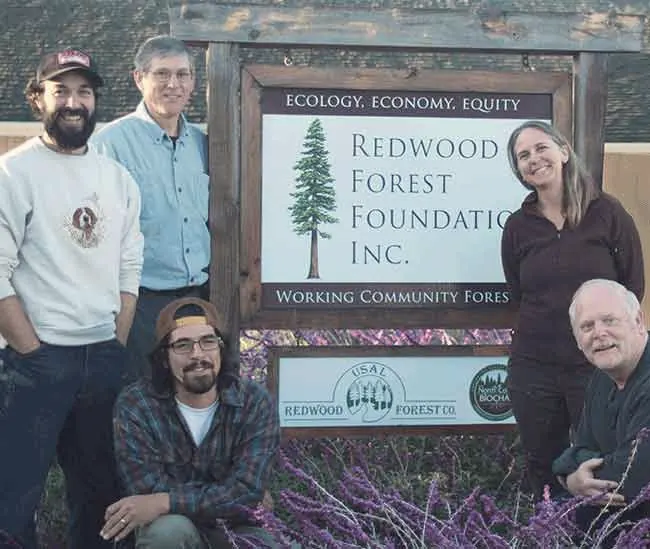
The founders
Three words to steer by
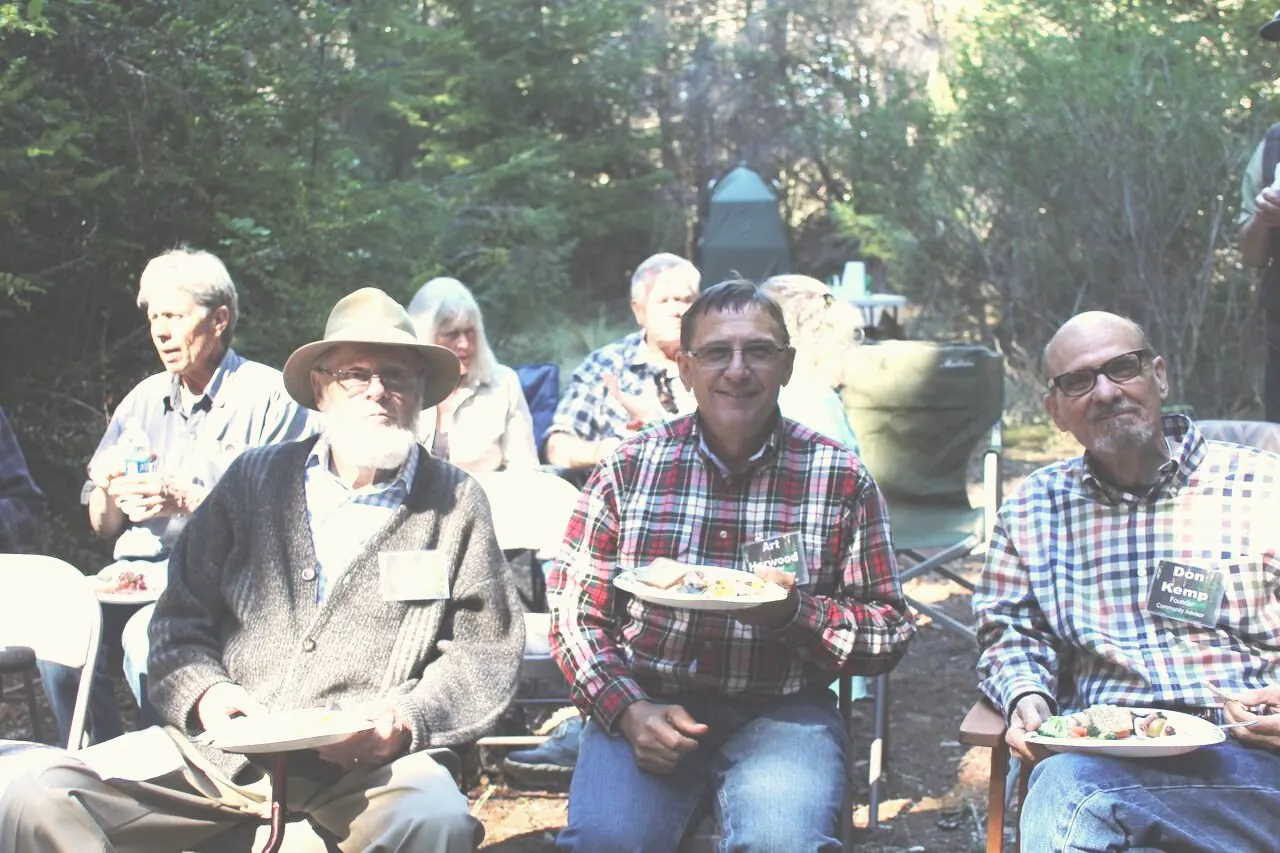
Among the people RFF counts as its founders: Art Harwood, its first president, Henry Gundling, Pete Passof, Greg Giusti, Bill Heil, Linda Perkins and Meca Wawona. Steve Zuieback helped them find their common ground, and gave them three words to hold every decision against.
EcologyEconomyEquity
A forest that is healthy, that pays its way, and whose good stays with the people who live around it. Not one of the three. All of them, at once.
7 October 1999
The rules came before the land
RFF didn't own a single acre yet. The board wrote down how it would run one anyway, and approved its Basic Tenets:
- Never cut more than the forest grows.
- Pay off the debt before anything else.
- Buy only from willing sellers.
- No forestry that depends on chemicals.
- Find income beyond timber.
The next year they wrote one more promise into the charter itself: if RFF ever closes, everything it owns goes to the County of Mendocino.
1998–2007
Ten years of trying
Buying a forest takes money a volunteer board doesn't have. In 1999 board members went to Washington to argue for forest bonds. A supporter, Giles Mead, sent a gift of $100,000 that nobody had asked for. They kept meeting. They kept planning. They kept their three words.
It took almost ten years.
14 June 2007
The day it happened
RFF and Bank of America announced that RFF had bought the Usal Redwood Forest from Hawthorne Timber Company: more than 50,000 acres of the Lost Coast, logged for over a century. It was billed as the first forest in America bought by a nonprofit with private capital alone.
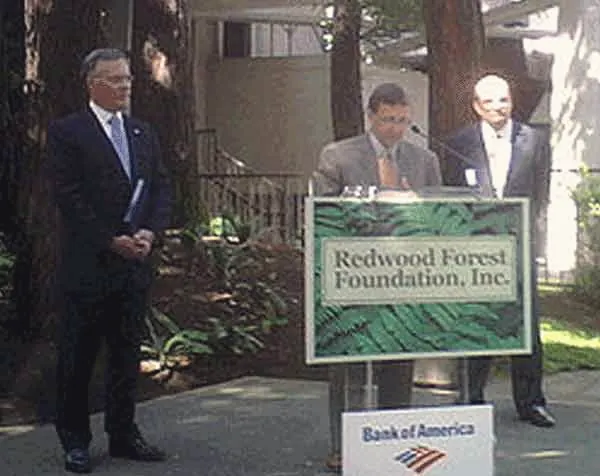
“We are doing this by ending the 30 years of fighting, and focusing on what unites us.”
Art Harwood, president of RFF, June 2007
2008–2011
It was close
The plan was to pay down the loans by selling a conservation easement: a permanent promise about what the land can never become. Then the 2008 crash hit timber, and the sale slipped by three years. RFF's own account in 2009 was blunt: without that sale, it would break the terms of its loans by the end of 2011.
The sale closed in October 2011.
49,576
acres protected by a conservation easement, for good
- Never subdivided. Never turned into houses or farms.
- A cap on how much can be cut, every year.
- Independently certified, always.
Bought by The Conservation Fund with $19.5 million from the state's Wildlife Conservation Board, and held by CAL FIRE since December 2014. At the same time, 957 acres of coast, Shady Dell, went to Save the Redwoods League.
2012–2020
Then, the work
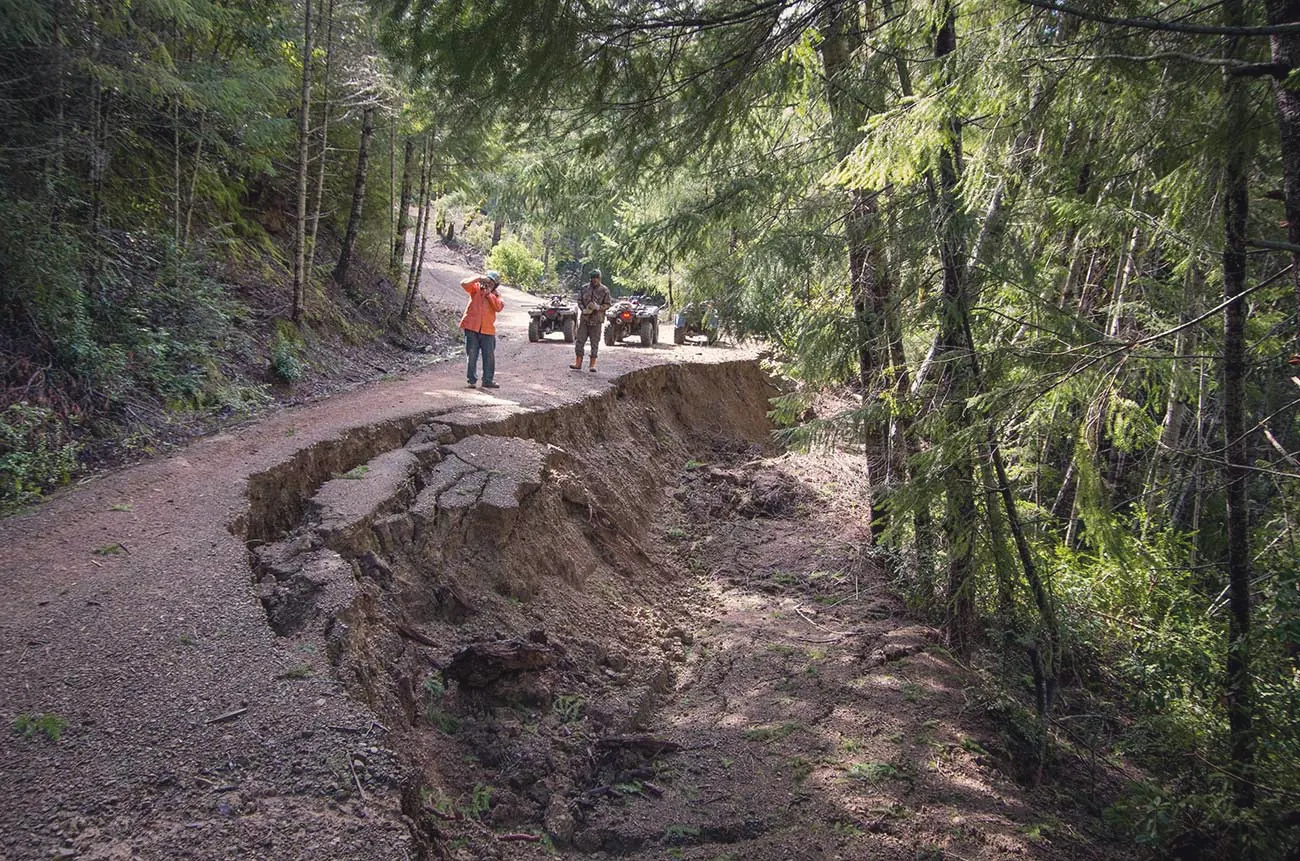
In September 2012, the first logs went out under RFF's ownership. In September 2015 Usal earned FSC certification, and that autumn RFF ended its contract with an outside manager and started running the forest itself, with its own foresters.
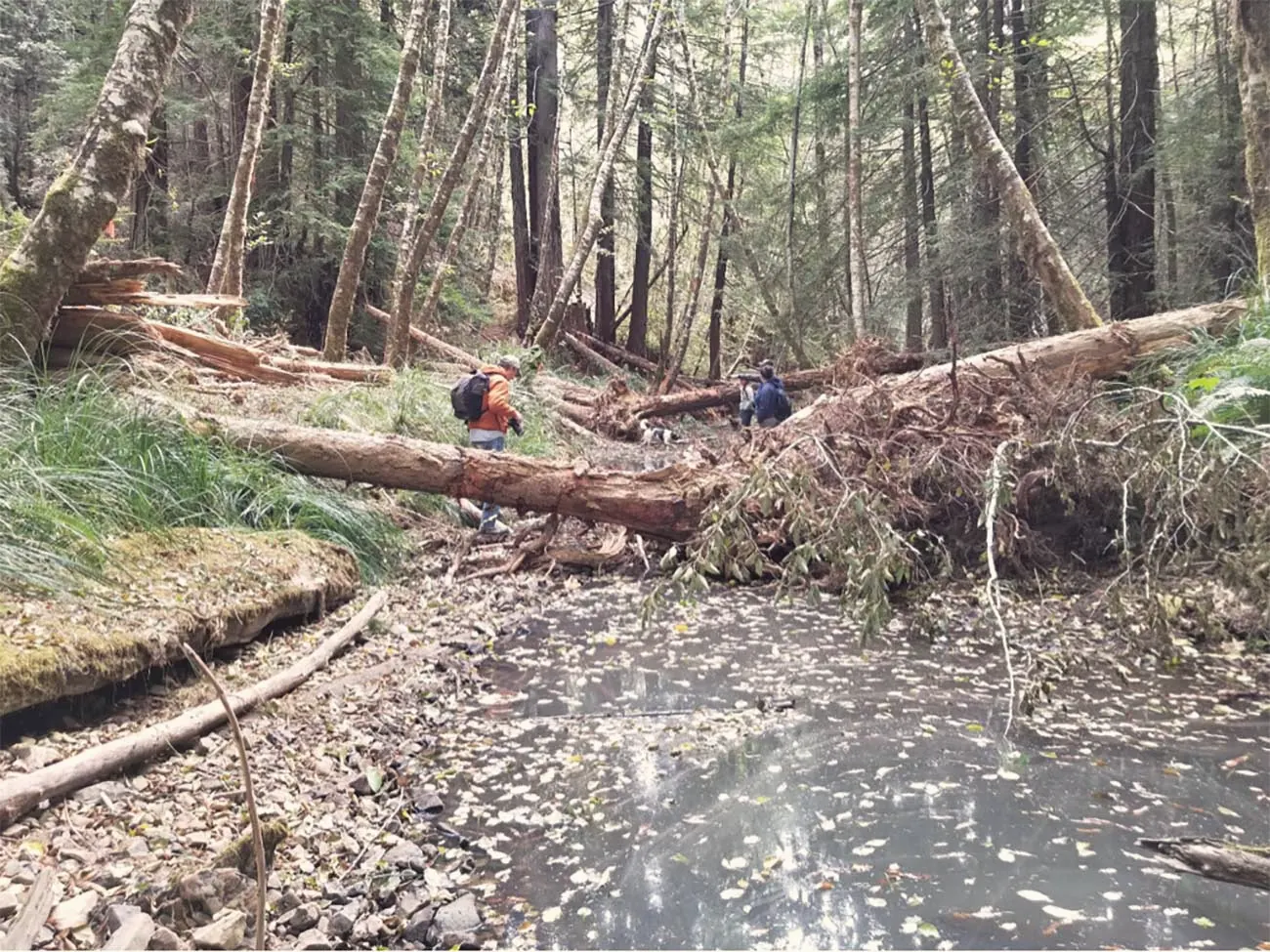
The Climate Action Reserve named RFF its 2015 Project Developer of the Year for registering Usal's forest carbon. In January 2016, coho salmon were seen spawning in Anderson Creek. In 2018, Standley Creek's 11-year restoration was finished.
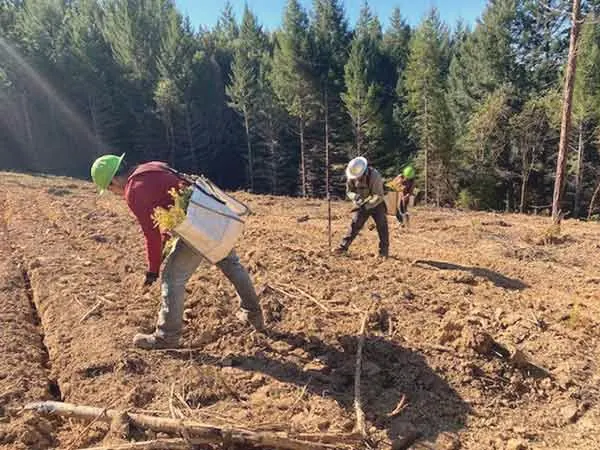
Since 2009, people have planted redwoods through RFF in memory of someone, or in their honour. By 2020, RFF counted more than 140,000 redwoods planted since 2010.
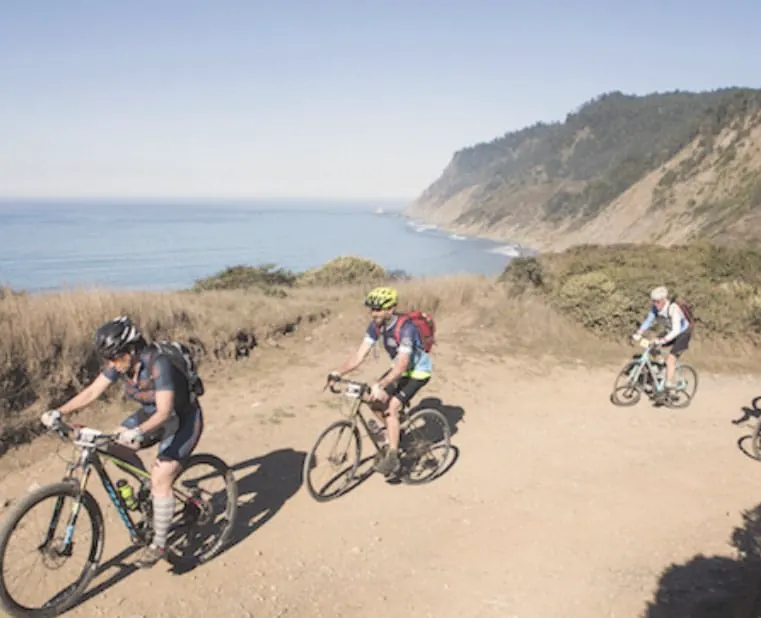
The forest found new friends, too. In 2017 a film crew came for Leonardo DiCaprio's Ice on Fire, which premiered at Cannes in 2019. Mountain bikers came for the Usal Hopper. In 2020, the Forest Stewardship Council gave RFF and the Usal Redwood Forest Company its Leadership Award.
2021–2023
Still growing
In October 2021, RFF wrote a new vision: “healthy productive forests that restore local connection and control, ecosystem health and diversity, economic opportunity, and climate resilience throughout the Redwood Region.”
In May 2023 Reist Ranch, 95 acres inside Usal that one family had held for about a century, became part of the forest. And on 1 November 2023, RFF held its first prescribed burn.
Dec 1997
the first meeting
9½ years
from that meeting to the first acre
49,576
acres that can never be subdivided
1
forest, owned by a nonprofit, run for the region
In their own words
Hear it from the people who were there
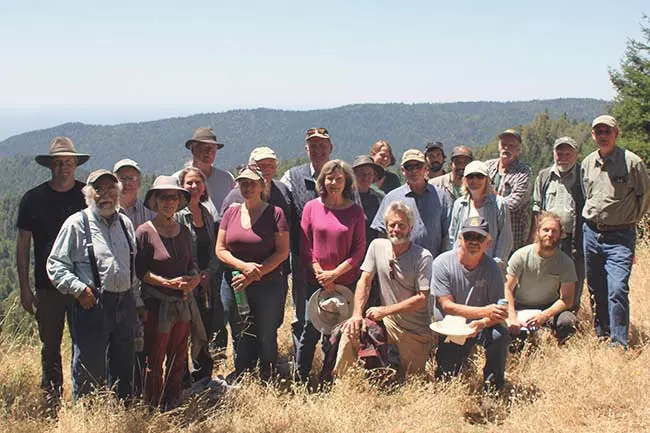
In 2019, RFF sat down with some of the people who started it and recorded long conversations about how it began.
Art Harwood
RFF's first president
Greg Giusti
Founder
Bill Heil and Linda Perkins
Founders
Candy Skarlatos
Board member
The short version
Timeline
- 1990Redwood Summer: the Timber Wars at their height.
- Oct 1997Louisiana-Pacific puts its California timberland up for sale.
- Dec 1997A new group meets, forms a board and names itself.
- 8 Jan 1998Redwood Forest Foundation is incorporated.
- 7 Oct 1999The board approves its Basic Tenets.
- Jun 2007RFF buys the Usal Redwood Forest.
- 2009Plant a Redwood begins.
- Oct 2011A conservation easement protects 49,576 acres for good.
- Sep 2012The first logs go out under RFF's ownership.
- Sep 2015Usal earns FSC certification.
- Late 2015RFF starts running the forest itself.
- Jan 2016Coho salmon seen spawning in Anderson Creek.
- 2018Standley Creek's 11-year restoration is finished. The first Usal Hopper.
- 2019Usal on screen in Ice on Fire.
- Nov 2020FSC Leadership Award.
- Oct 2021A new vision for RFF.
- May 2023Reist Ranch joins the forest.
- 1 Nov 2023RFF's first prescribed burn.
Redwoods are in no hurry. Neither are we.
The forest RFF bought in 2007 had been logged for more than a century. Bringing it back is slow work, done a creek, a road and a seedling at a time. The next chapter is being written now.