.jpg)


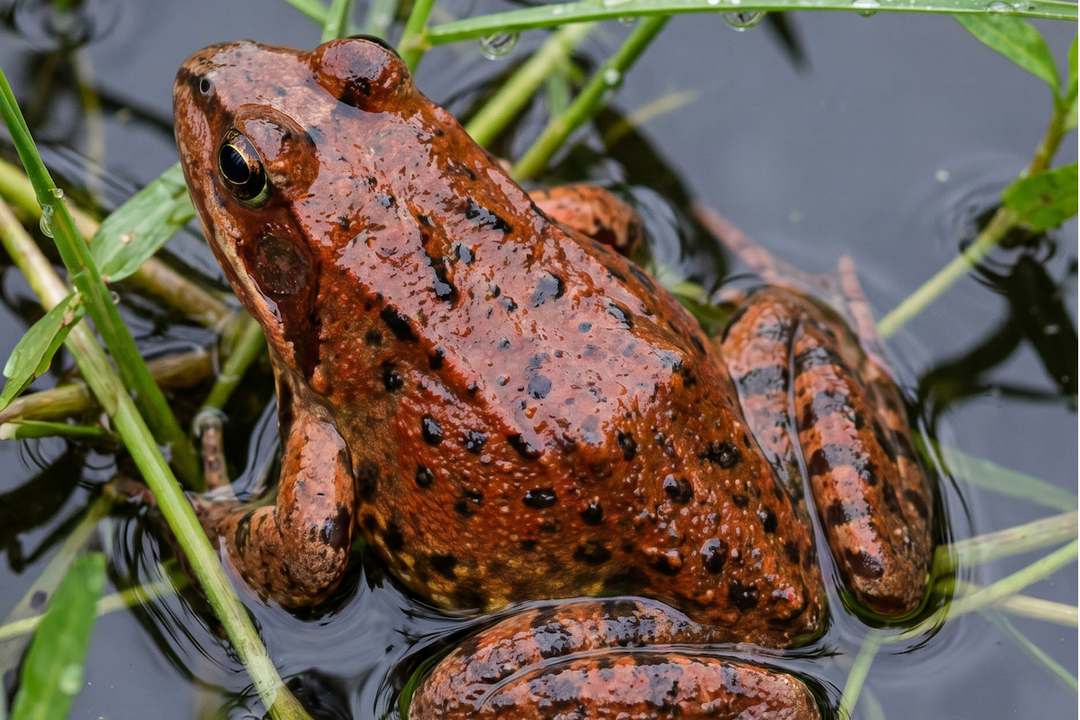
The California red-legged frog is the largest native frog in the western United States, and Usal Redwood Forest sits near the northern edge of its range on the Mendocino Coast. It is the same species Mark Twain wrote about in The Celebrated Jumping Frog of Calaveras County, though its statewide population today is a fraction of what it once was across California.
What Is a California Red-Legged Frog?
A California red-legged frog, or Rana draytonii, can reach up to five inches in body length, making it the largest native frog species found anywhere in the western United States. Its reddish underside on the abdomen and hind legs gives the species its name, and its back ranges from brown to olive to gray, marked with dark blotches and often a light stripe along the upper jaw that helps distinguish it from similar looking frogs in the same wetlands. It is largely nocturnal, spending days hidden in dense vegetation near ponds, slow streams, and wetlands, and it depends on that cover to avoid predators like herons and non-native bullfrogs, which have displaced it across much of its former range through both predation and direct competition for the same breeding pools.
What Role Does the Red-Legged Frog Play in Usal's Wetlands?
The red-legged frog needs still or slow moving water with dense overhanging vegetation to breed and for its tadpoles to develop, conditions found in the ponds and low gradient stream sections scattered across Usal. As both predator and prey, it plays a role at multiple points in the local food web, feeding on insects and smaller amphibians while serving as a food source for herons, raccoons, and garter snakes that share the same wetland edges. Its historic range once extended from southern Mendocino County down through the Central Valley and along the coast to Baja California, placing Usal near the northern edge of where the species still persists in the wild today.
Why Does the California Red-Legged Frog Matter?
Listed as threatened since 1996, the species has lost more than ninety percent of its historic wetland habitat statewide, largely to development and the introduction of non-native predators. Protecting the ponds and slow water sections within a working forest like Usal helps preserve one of the few pieces of intact habitat left within the frog's shrinking range, particularly this close to the northern boundary of where it still occurs today.
Learn more about the habitat restoration work now underway. Visit redwoodforests.org/watershed-restoration.
FAQ - Frequently Asked Questions
What is a California red-legged frog?
A California red-legged frog (Rana draytonii) can reach up to five inches in body length, making it the largest native frog species in the western United States. Its reddish underside on the abdomen and hind legs gives the species its name. It is the same species Mark Twain wrote about in The Celebrated Jumping Frog of Calaveras County.
Where do red-legged frogs live?
Red-legged frogs need still or slow-moving water with dense overhanging vegetation to breed and for tadpoles to develop. Conditions found in the ponds and low-gradient stream sections scattered across Usal provide ideal habitat near the northern edge of the species' current range.
How did red-legged frogs disappear from California?
Listed as threatened since 1996, the species has lost more than ninety percent of its historic wetland habitat statewide, largely to development and the introduction of non-native predators like bullfrogs and herons.
What role do red-legged frogs play in Usal's wetlands?
As both predator and prey, red-legged frogs play a role at multiple points in the local food web, feeding on insects and smaller amphibians while serving as a food source for herons, raccoons, and garter snakes.
Why does Usal matter for red-legged frog recovery?
Protecting the ponds and slow-water sections within a working forest like Usal helps preserve one of the few pieces of intact habitat left within the frog's shrinking range, particularly this close to the northern boundary where it still occurs.