.jpg)



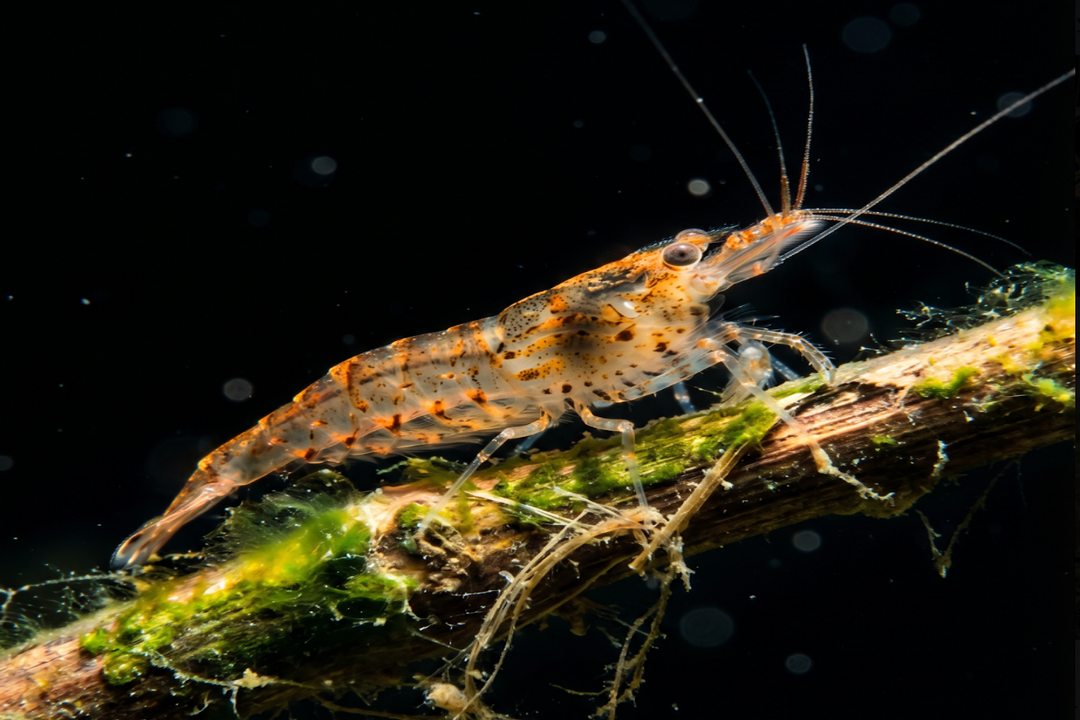
The California freshwater shrimp lives nowhere near the ocean despite what its name suggests. It survives only in a small handful of slow moving coastal streams in Northern California, and its story shows how narrow a species' margin for survival can be, and how quickly that margin can disappear entirely.
What Is a California Freshwater Shrimp?
The California freshwater shrimp, or Syncaris pacifica, is a small, translucent decapod crustacean, rarely longer than two inches, and it is the only surviving species in its genus. According to the U.S. Fish and Wildlife Service, it shelters along undercut stream banks, beneath overhanging roots and vegetation, in slow, low gradient streams with sandy bottoms, and it is currently confirmed in only a small number of stream segments across Marin, Sonoma, and Napa counties in Northern California. Both sexes can shift their coloration to blend into their surroundings, a defense against the herons, fish, and other predators sharing the same water. It reproduces once a year, typically in fall, and depends entirely on stable, undisturbed streambank habitat to complete its life cycle.
What Role Does the Shrimp's Habitat Play in Northern California's Watersheds?
The shrimp's habitat requirements, cold, clean, slow moving water lined with intact bankside vegetation, are the same conditions that salmon, newts, and dozens of other Northern California stream species need to survive. Where the shrimp persists, according to the National Park Service's Pacific Coast Science and Learning Center, it is usually a sign that a stream corridor has not been straightened, dammed, or stripped of its bankside cover. Its extreme sensitivity to sedimentation and water diversion makes it one of the clearest indicators available for how well a watershed is being managed upstream, since even modest increases in runoff or streambank disturbance can eliminate a population within a single breeding season.
Why Does the California Freshwater Shrimp Matter?
Listed as federally endangered since 1988, the species has almost no room left for further habitat loss given how few stream segments still support it across its entire range. Its story is a reminder of what is at stake in every watershed restoration project across California's redwood coast, including the stream work already underway at Usal. Protecting the specific conditions this shrimp needs, shade, clean gravel, undisturbed banks, tends to protect them for every other species sharing the same water, which is why a species this narrowly distributed still matters to forests well outside its own range, including working forests on the Mendocino Coast that manage similar streams.
Learn more about the watershed work underway at Usal. Visit redwoodforests.org/watershed-restoration.
FAQ - Frequently Asked Questions
What is a California freshwater shrimp?
The California freshwater shrimp (Syncaris pacifica) is a small, translucent decapod crustacean, rarely longer than two inches, and is the only surviving species in its genus. It shelters along undercut stream banks, beneath overhanging roots and vegetation, in slow, low-gradient streams.
Where do California freshwater shrimp live?
The species is currently confirmed in only a small number of stream segments across Marin, Sonoma, and Napa counties in Northern California, roughly 100+ miles south of Usal.
What do freshwater shrimp need to survive?
Shrimp require cold, clean, slow-moving water lined with intact bankside vegetation. These habitat requirements are the same conditions that salmon, newts, and dozens of other Northern California stream species need to survive.
Why are freshwater shrimp so sensitive?
Their extreme sensitivity to sedimentation and water diversion makes them one of the clearest indicators available for how well a watershed is being managed upstream. Even modest increases in runoff or streambank disturbance can eliminate a population within a single breeding season.
Why does shrimp conservation matter?
Listed as federally endangered since 1988, the species has almost no room left for further habitat loss. Protecting the conditions shrimp need tends to protect them for every other species sharing the same water.