.jpg)




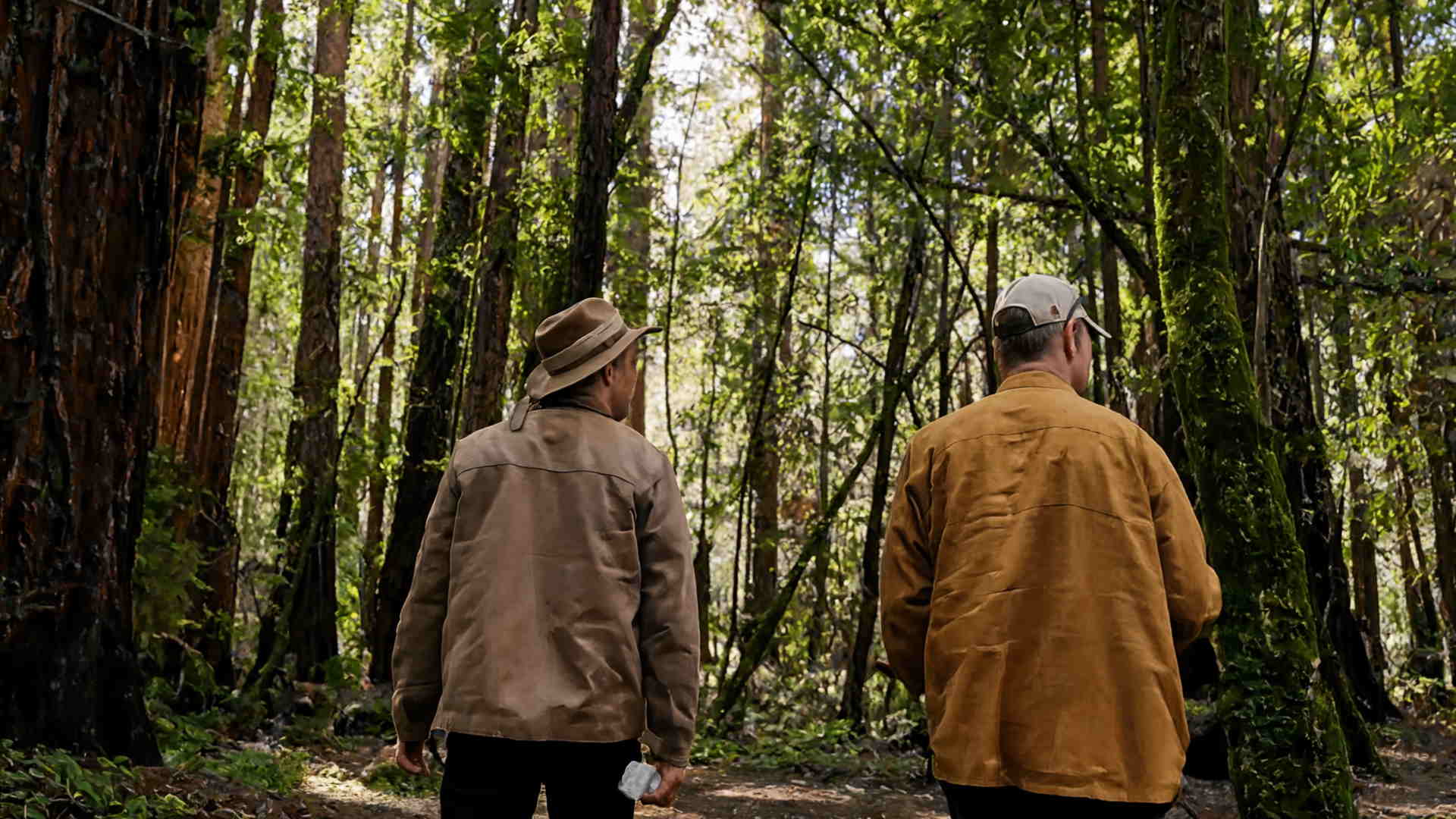
The Humboldt marten once lived across coastal redwood forests from the Oregon border all the way south through Mendocino County. Today, the species is extirpated from the southernmost part of its historic range, including Usal, though the forests where it used to den are still restoring the conditions that could eventually support its return.
What Is a Humboldt Marten?
A Humboldt marten, or Martes caurina humboldtensis, also called the coastal marten, is a cat-sized member of the weasel family with a slender body, rounded ears, and a rich brown coat often with a pale orange or tan throat patch. The Humboldt marten is a fast, agile climber that hunts small mammals, birds, insects, and fruits depending on the season and availability. It dens in cavities inside large diameter trees and in hollow logs, which directly ties its survival to forests old enough to contain that kind of structure. The species was listed as federally threatened in October 2020 and as endangered under California law in 2018, with critical habitat designated in 2024.
What Happened to Humboldt Martens at Usal?
The Humboldt marten has been extirpated from Sonoma and Mendocino counties entirely and now survives in only four small, isolated populations in Humboldt, Del Norte, and Siskiyou counties in California, along with two populations across the Oregon border. The decline was driven primarily by logging that removed the dense shrub understory the species needs, a habitat loss that happened faster than the remaining population could adapt. In the 1930s and 1940s, the species had already become rare across its former range, hunted as a fur-bearing animal and displaced by industrial logging. Usal sits within the species' historic range but outside its confirmed current range, creating a situation where the slow recovery work happening here could eventually matter to a broader, long-term regional recovery.
Why Does Usal Matter for Marten Recovery?
The Humboldt marten needs more than tall trees. It needs a thick tangle of shrubs beneath a mature tree canopy, structure that takes decades of undisturbed growth to develop and longer still to recover once lost. As second-growth redwood forest across this broader region matures and re-develops the dense shrub layer the species requires, properties like Usal become increasingly relevant to the long-term goal of reconnecting habitat across the marten's historic range, from Humboldt County all the way south toward Mendocino again.
Support the forest recovery work that restores this kind of complex habitat. Visit redwoodforests.org/ways-to-give.
FAQ - Frequently Asked Questions
What is a Humboldt marten?
A Humboldt marten (Martes caurina humboldtensis), also called the coastal marten, is a cat-sized member of the weasel family with a slender body, rounded ears, and a rich brown coat with a pale orange throat patch. It is a fast, agile climber that hunts small mammals, birds, and insects.
Where does the Humboldt marten live today?
The species has been extirpated from Sonoma and Mendocino counties and now survives in only four small, isolated populations across Humboldt, Del Norte, and Siskiyou counties in California and two counties in Oregon. Usal sits within the species' historic range but not within its confirmed current range.
What habitat does the marten need?
Martens need the understory as much as the canopy, favoring forest with a thick tangle of shrubs beneath a mature tree layer. This combination takes decades of undisturbed growth to develop and even longer to recover once lost.
Why was the Humboldt marten listed as threatened?
The species has lost 90 percent of its range and was listed as federally threatened in October 2020. In 2024, the Service designated 1.2 million acres of critical habitat in Northern California and southwestern Oregon to support its recovery.
Why does Usal matter for marten recovery?
As second-growth redwood forest across the broader region matures and develops the dense shrub layer martens require, properties like Usal become more relevant to the long-term goal of reconnecting habitat across the species' historic range.