

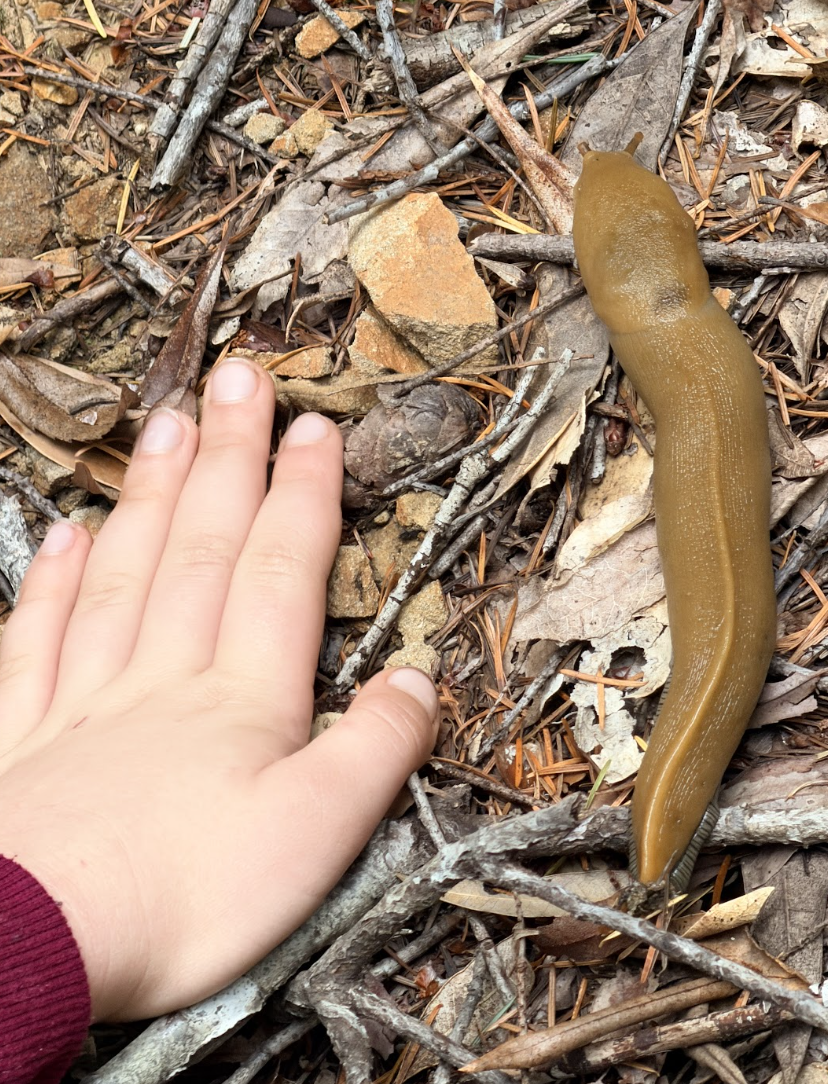
Banana slugs move about six inches a minute across the floor of Usal Redwood Forest, and in that slow crawl they perform one of the more overlooked jobs in the ecosystem. They are, in effect, the forest's cleanup crew.
Meet the Forest's Slowest Resident

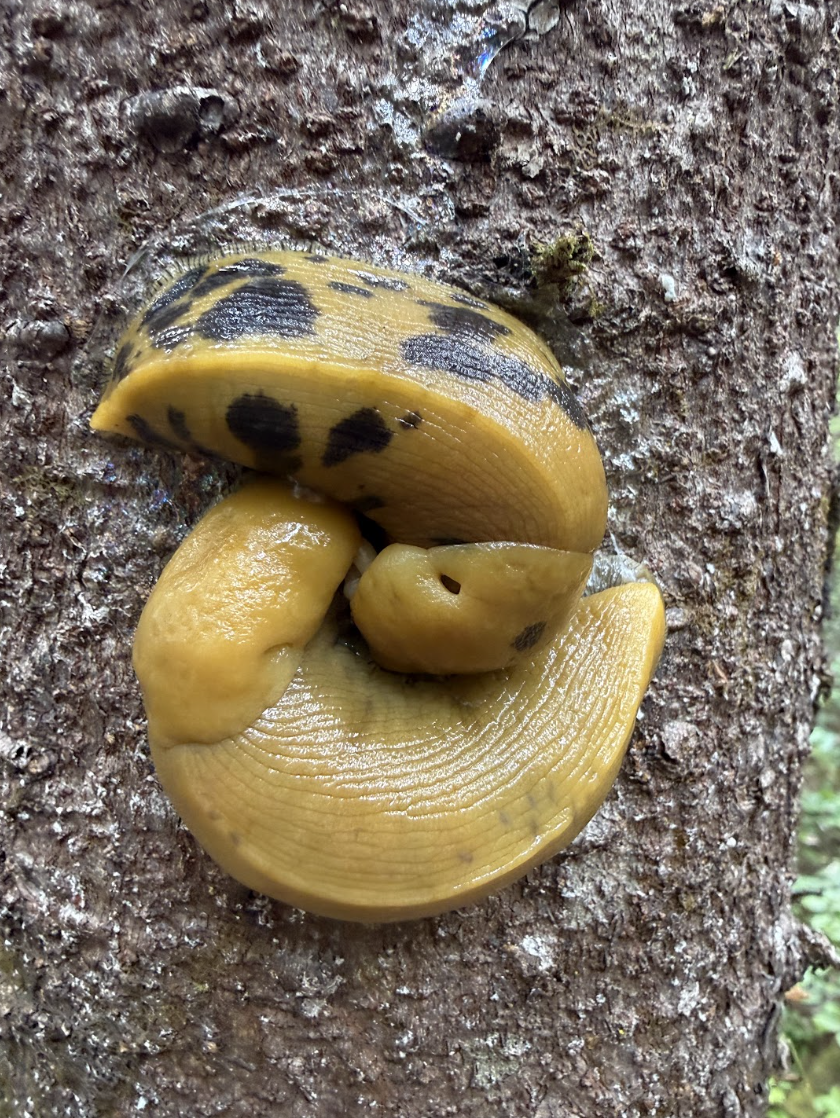
Ariolimax is a genus of large, shell-less land slugs native to the fog belt forests of the Pacific coast, from California up through southeast Alaska.
They can grow close to ten inches long, most commonly in shades of bright yellow, though individuals range from green to brown to nearly black.
A banana slug breathes through a single lung, drawing air through an opening called a pneumostome on the side of its body, and moves by rippling a single muscular foot rather than crawling with legs.
How Banana Slugs Help Redwoods Grow
As a detritivore, the banana slug eats fallen leaves, decaying wood, animal droppings, and fungi, breaking them down into nutrient rich material that feeds the soil. In doing so, it also spreads seeds and fungal spores across the forest floor as it moves. Research has found that banana slugs will eat the seedlings of many competing plants but avoid eating young redwood sprouts, effectively clearing competition around new redwood growth without harming the tree itself, a small but real advantage for the reforestation already underway at Usal.
A Small Creature, A Big Signal
Banana slugs are not endangered, and that is part of the point. They are a stable, resilient piece of a functioning forest floor, and their presence in healthy numbers is itself a sign that the decomposition cycle feeding the rest of the ecosystem is working the way it should. Overlooked as they are, they are doing real work every time it rains.
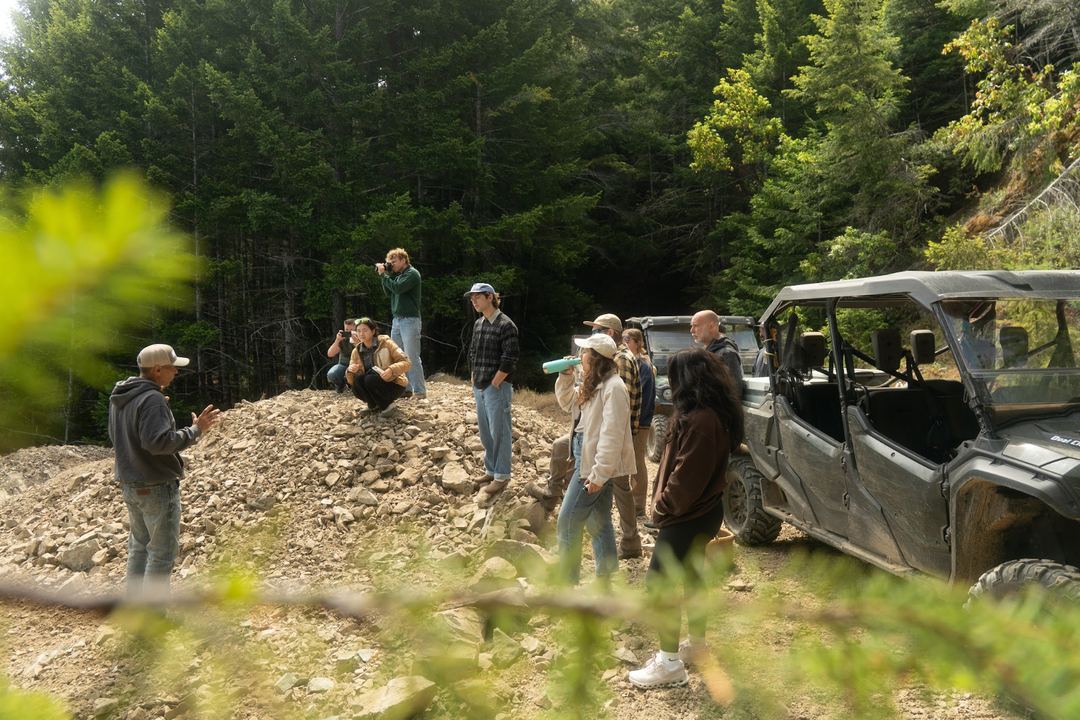
See the forest floor up close on the guided ATV tour. Visit redwoodforests.org/atv-tour.
FAQ - Frequently Asked Questions
1. Why are banana slugs important to redwood forests?
Banana slugs help keep redwood forests healthy by breaking down decaying leaves, fallen wood, fungi, and other organic matter. This process returns nutrients to the soil, supports new plant growth, and helps maintain the rich forest floor that young redwoods depend on.
2. Do banana slugs help redwood seedlings grow?
Yes. Research has shown that banana slugs often eat the seedlings of competing plants while leaving young redwood sprouts untouched. This reduces competition for sunlight, water, and nutrients, giving redwood seedlings a better chance to establish themselves.
3. Where can you find banana slugs in California?
Banana slugs are commonly found in the cool, moist coastal forests of Northern California, including old-growth and second-growth redwood forests like Usal Redwood Forest. They thrive in environments with abundant leaf litter, fallen logs, and year-round moisture.
4. Are banana slugs harmful to people or pets?
No. Banana slugs are harmless to humans and pets. They don't bite, sting, or carry venom. Their thick mucus helps protect them from predators and allows them to move across the forest floor, but they pose no danger to visitors.
5. Can you see banana slugs on the Usal ATV Tour?
Yes. Banana slugs are often spotted during the wetter months while exploring the forest floor on the guided Usal ATV Tour. Along the way, you'll also see towering coast redwoods, native ferns, fungi, and other wildlife that make this working forest a thriving ecosystem.