.jpg)


We Brought a Group of Creators and Scientists Into 50,000 Acres of Recovering Redwood Forest.
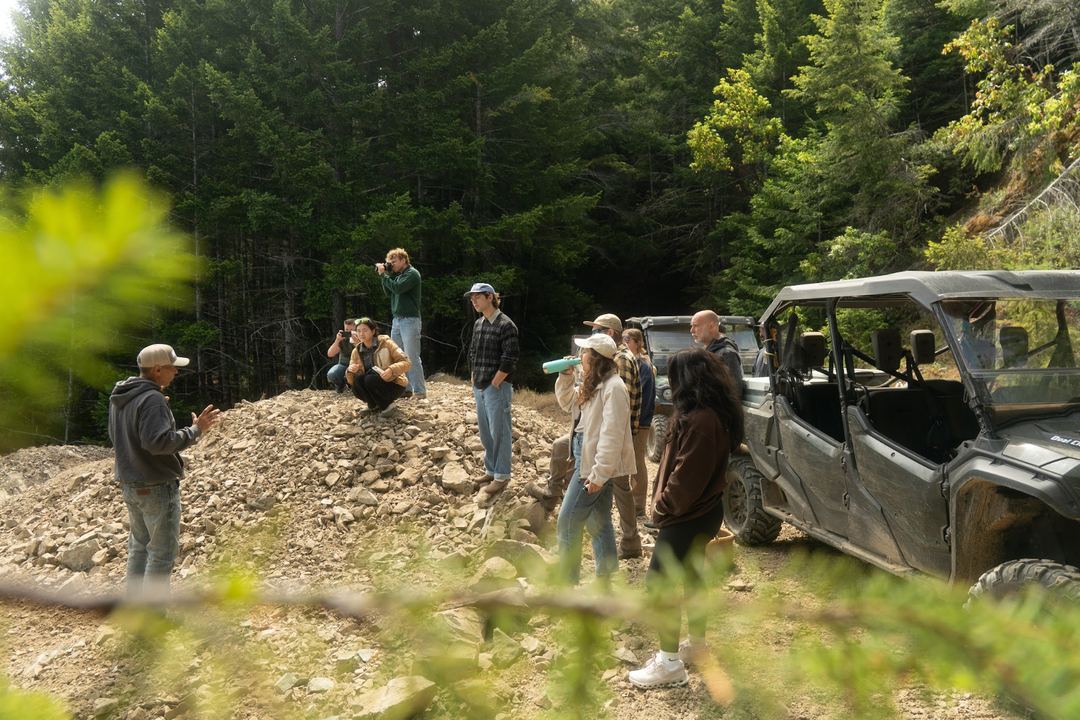
This June, we embarked on a 3-day journey to discover a recovering redwood forest on California's Lost Coast, walk its fern-lined trails, ride ATVs through its interior, and collect water samples from streams that coho salmon have started returning to. Here is how those three days went.
BY THE TIME HIGHWAY 128 BENDS TOWARD THE COAST, THE MEMORY OF THE CITY FADES AND WE ENTER A DIFFERENT WORLD
.webp)
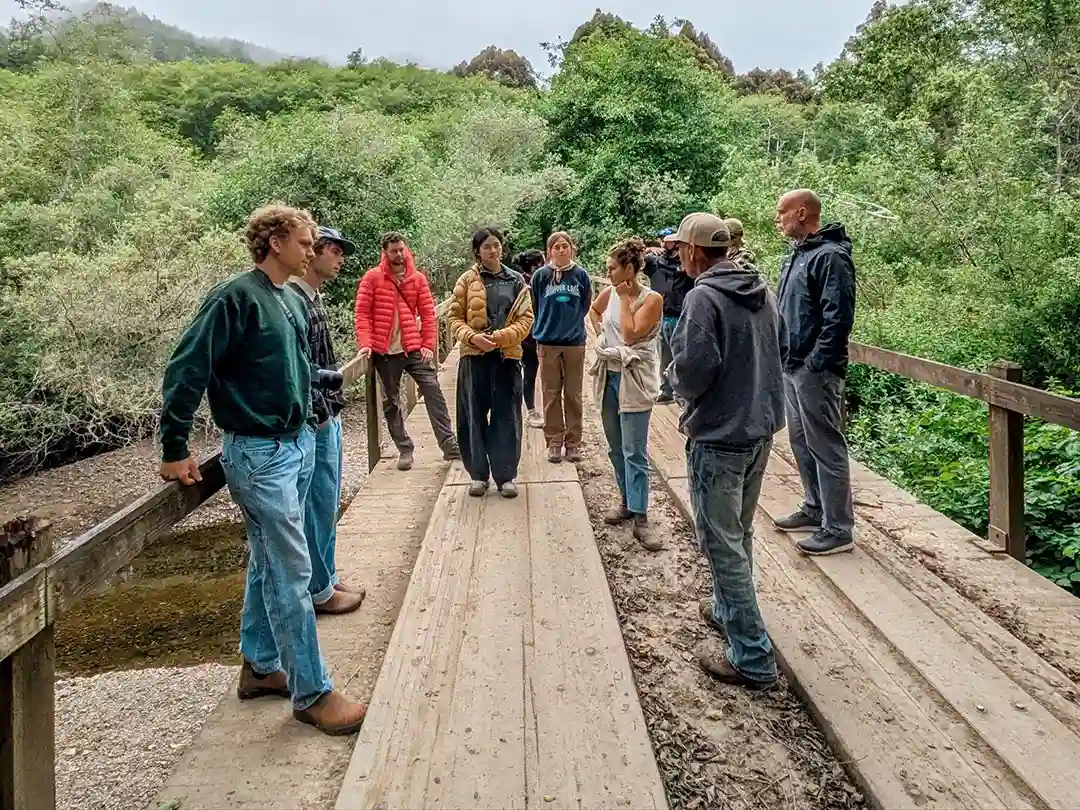
We met the group at Salesforce Tower in San Francisco on the morning of June 17 and drove north. The first hour passes through the familiar Bay Area, but by the time the van crosses into Mendocino County and Highway 128 bends westward toward the coast, the road begins to shrink and the trees begin to grow. Redwoods appear on both sides, and the quality of light through the windows changes from the flat brightness of the city to something more filtered and green, the way light looks when it has passed through a canopy before reaching you. Cell service becomes unreliable around this point, which most of the group noticed and none of them seemed to mind.
THE OLD GROWTH TREES AT HALES GROVE MAKE EVERYTHING ELSE FEEL RECENT
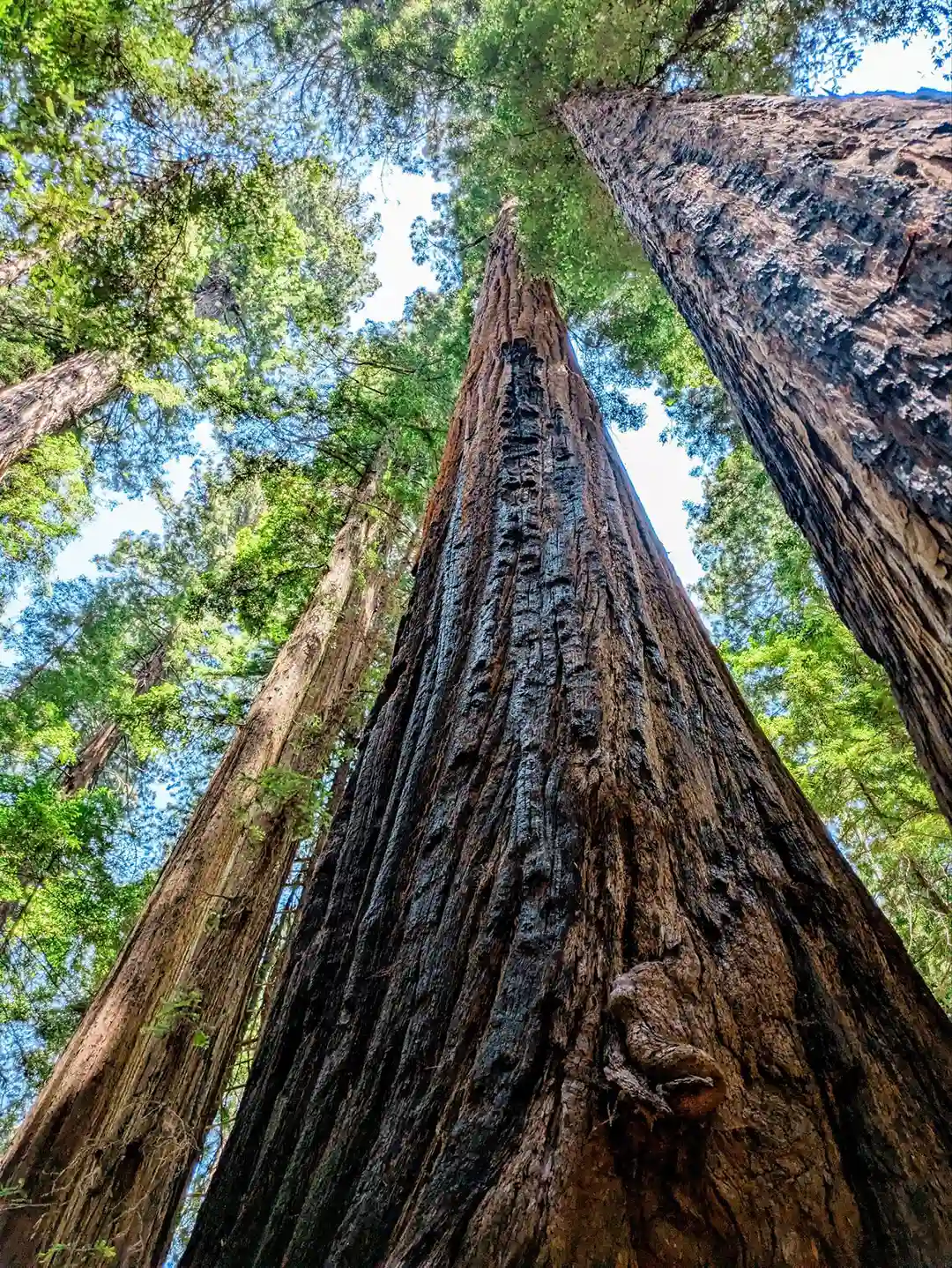
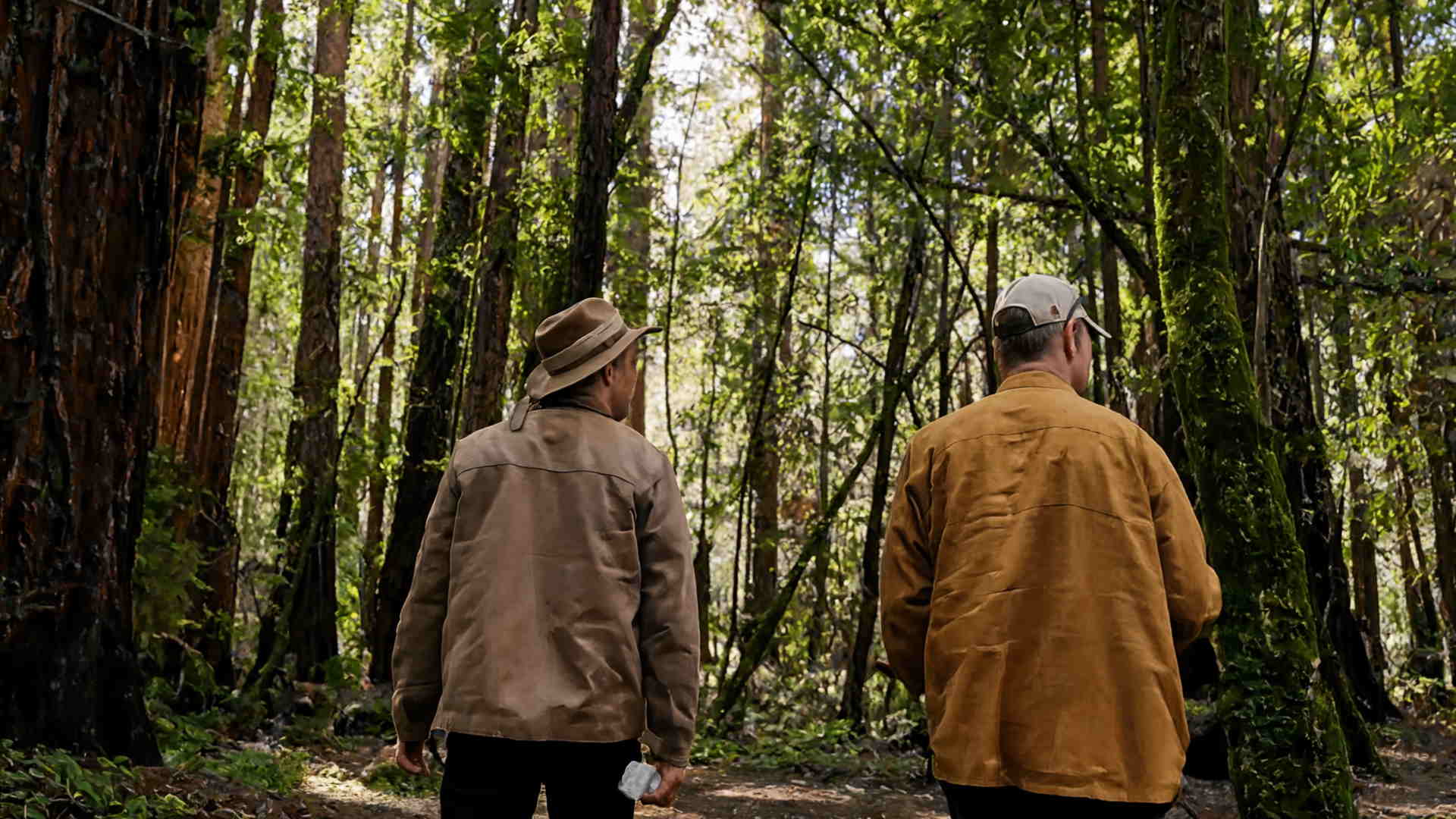
Our day in the forest begins at Hales Grove, where the largest remaining redwoods on the Usal property still stand. We see people arrive here with a mental picture of redwood forests formed mostly by photographs and state park visits. A few minutes in this grove quietly revises that picture. These photographs miss something about the width of the base, and about the way a trunk this size occupies your entire field of vision when you stand close to it. One of the guests pressed both hands flat against the bark and stood there for a while without saying anything.
Standing in a forest where some trees are measured in centuries changes the time scale of what you think you are looking at. The work Redwood Forest Foundation does across 50,000 acres, the 250,000 native redwoods planted, the nearly 20 miles of salmon-bearing streams restored, the sediment kept out of rivers, all of it is aimed at one outcome, which is giving Usal forest the conditions it needs to produce more of what is standing at Hales Grove, because these trees show the old-growth trajectory the rest of the property is growing toward.
20 SPECIES IDENTIFIED IN ONE MORNING WALK, ON A DAY THAT WASN'T EVEN DURING MUSHROOM SEASON
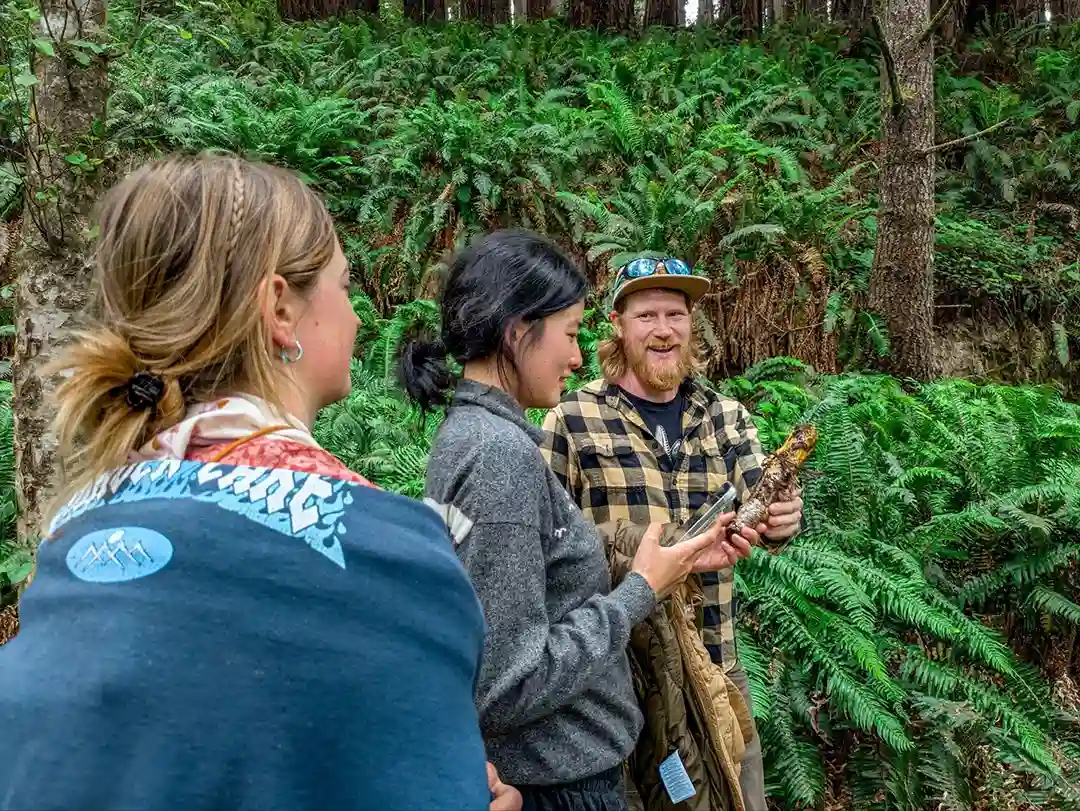
From Hales Grove, the group loaded onto ATVs in the morning fog to explore the interior sections of the property. On the forest walks that morning, our field team led the group through sections where the restoration work is visible as you move through the understory.
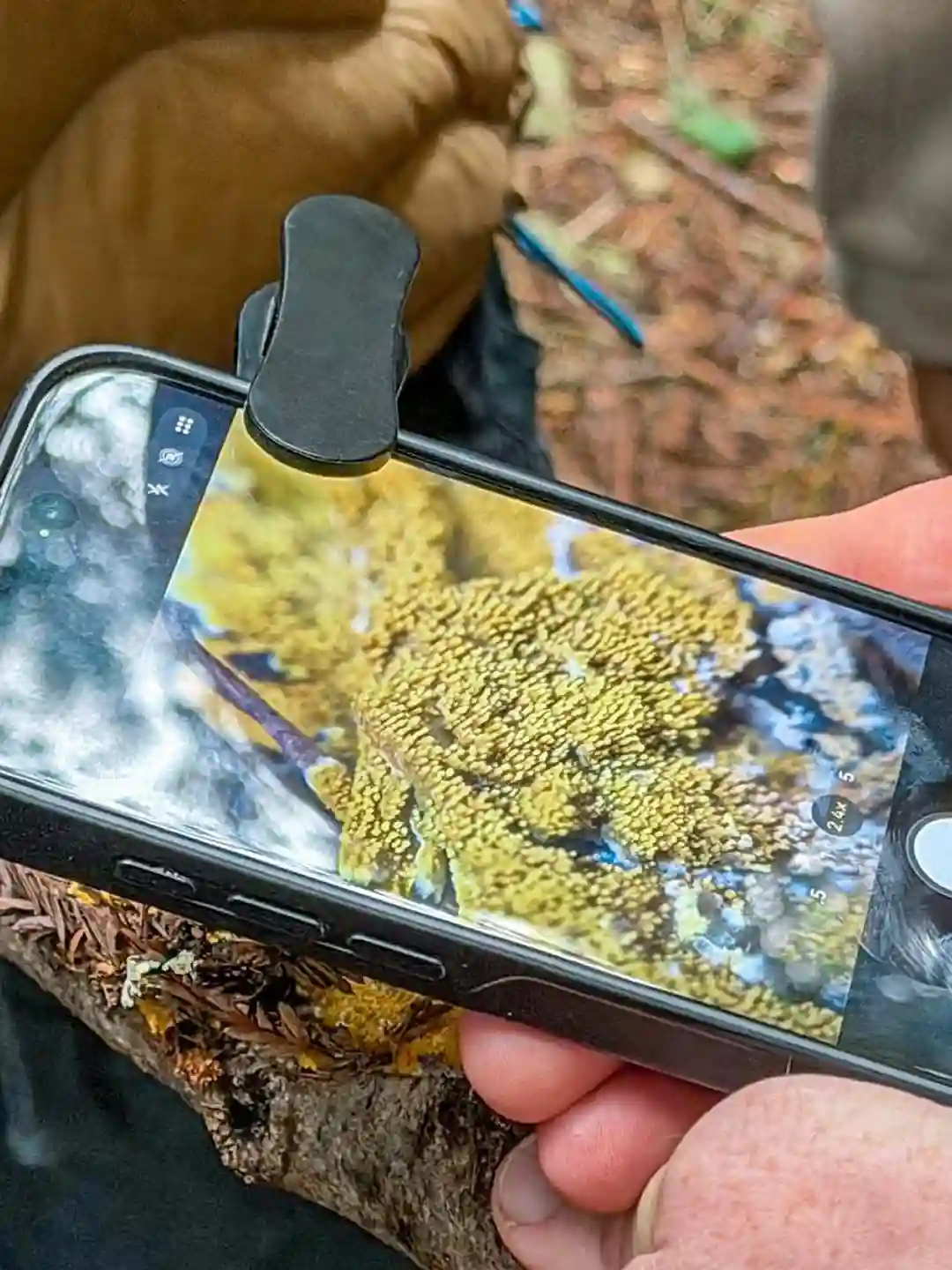
The mycologist Dr. Gordon Walker, who is behind the channel Fascinated By Fungi, came specifically to see what was living in the forest floor. What he found surprised him. "Although it's not mushroom season in Mendocino, I was surprised to see how much fungal activity there was due just to moisture from the fog drip. Looking forward to visiting again when the mushies are in full swing." By the end of the walk, he had identified 20 species, including Yellow Fairy Cups (Calycina citrina), the rare parasitic Gnome Plant (Hemitomes congestum), Redwood Sideband Snails, and Banana Slugs moving through the duff with the unhurried confidence of animals that know no predator is coming for them.
LOOKING STRAIGHT UP THROUGH THE CANOPY IS A DIFFERENT KIND OF SPATIAL EXPERIENCE
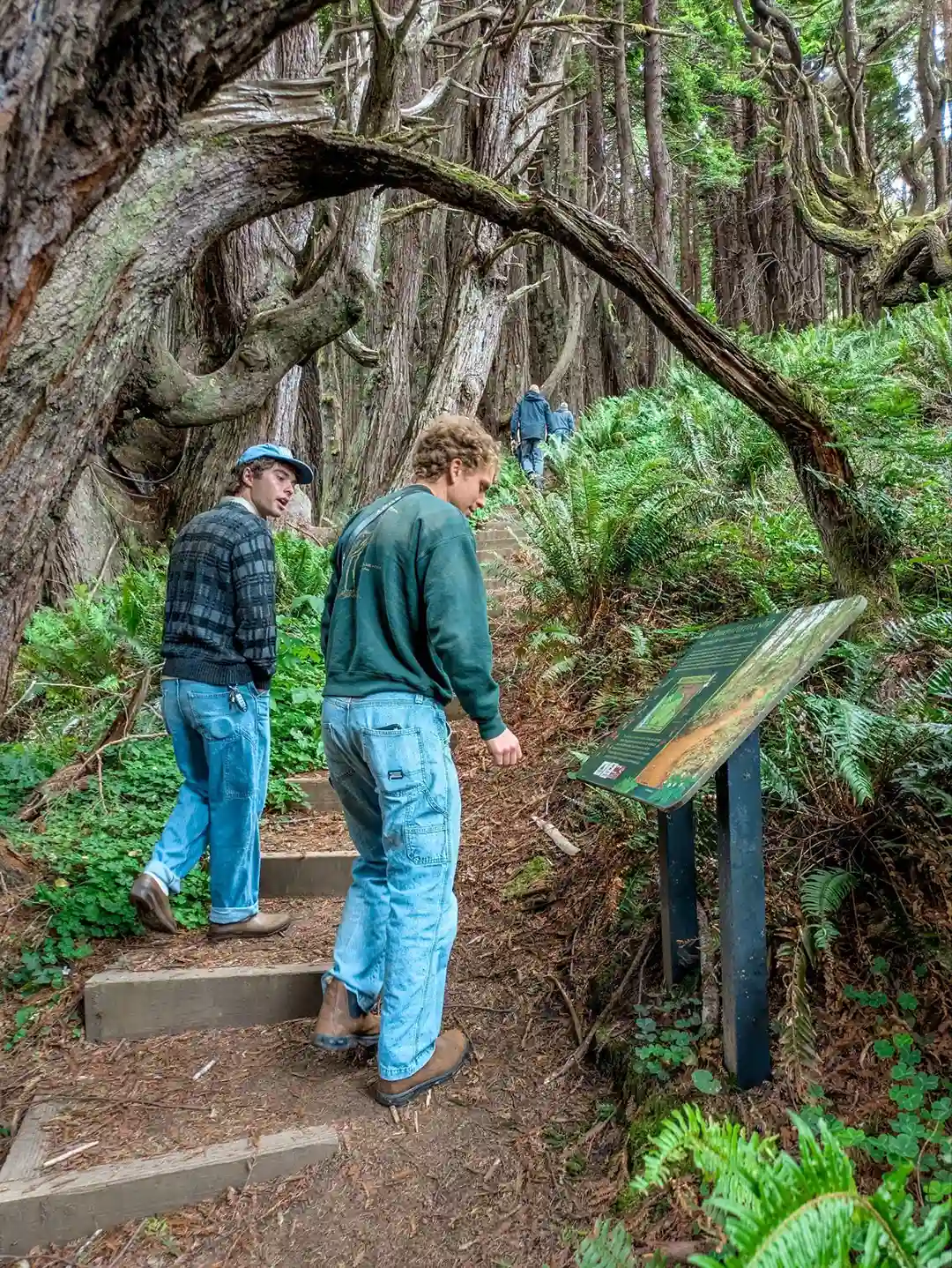
At one point on the walk, one of the creators stopped and took a photograph looking straight up through the canopy. The photo captures something the guides have been watching guests try to photograph for years, which is the particular vertigo of standing at the base of a redwood stand and looking directly at the sky through layer after layer of branch and needle, well over a hundred feet above. From the trail you see a tree, but from underneath one of these trees with your eyes pointed upward, the scale of 50,000 acres starts to make a different kind of sense entirely.
SIX COLD WATER SAMPLES FROM A MENDOCINO COAST STREAM, AND WHAT THEY WILL TELL US ABOUT COHO SALMON
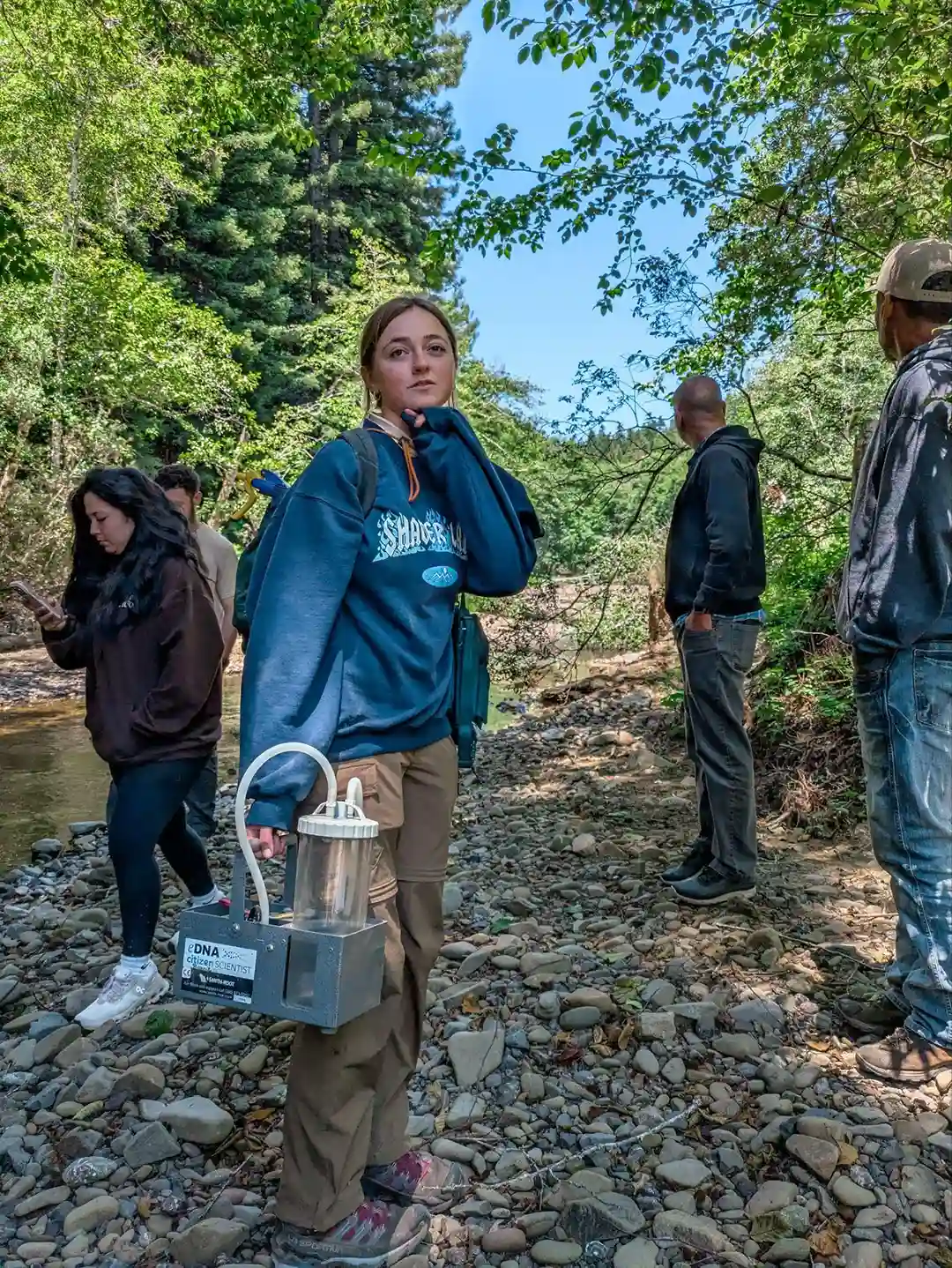
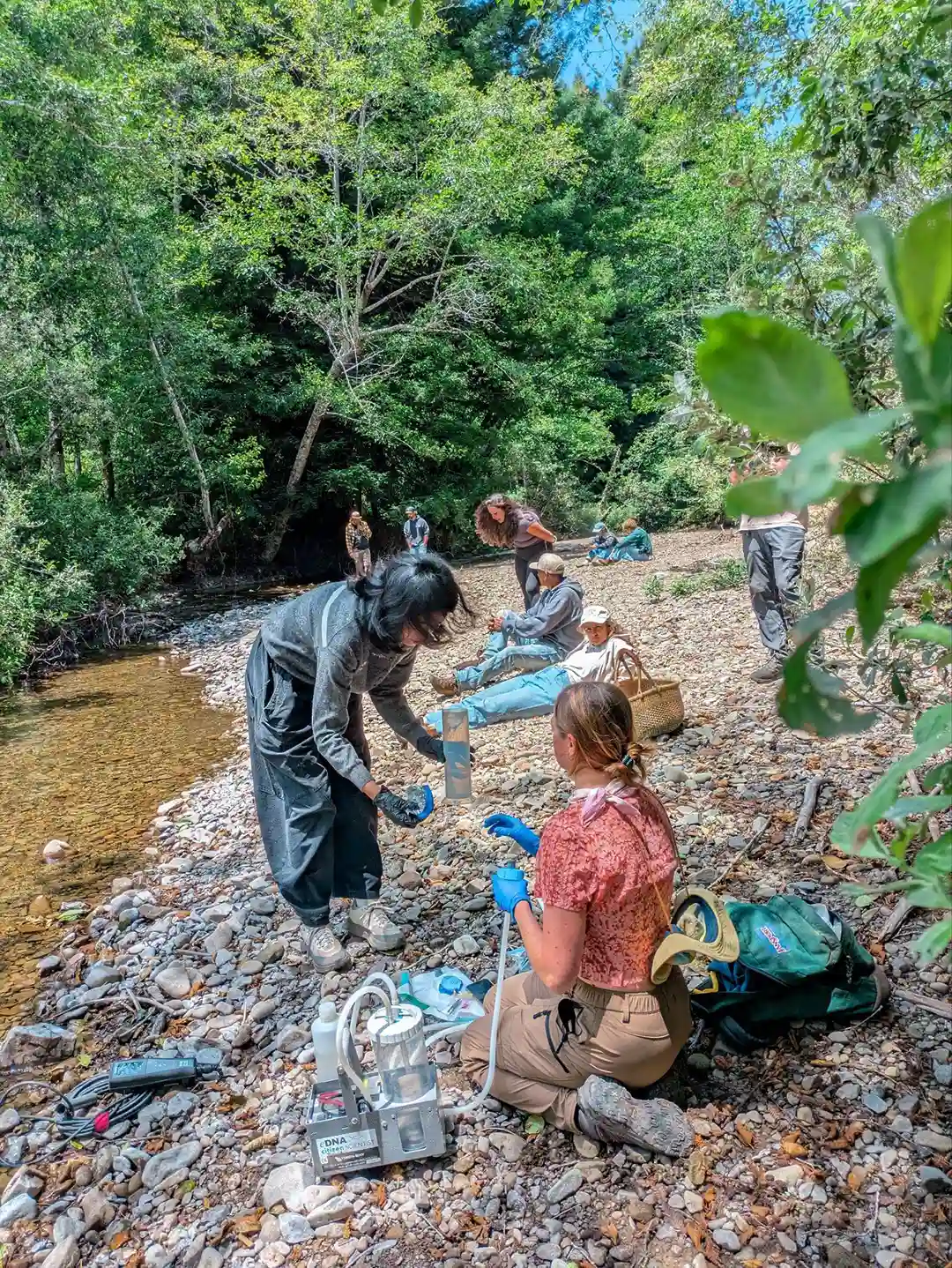
After lunch at a gravel bar along one of Usal's restored salmon-bearing streams, we introduced the group to Keana Wolcott, a lab technician from CALeDNA, California's statewide environmental DNA biodiversity program. Environmental DNA is the genetic material that organisms leave behind in water as they pass through it - flakes of scale, shed tissue, and biological traces in the current. A water sample collected from the right location, filtered through the right membrane, and processed by the right lab can identify every vertebrate species present in that section of the stream over the past several days, with no traps, nets, or physical contact with the animals needed.
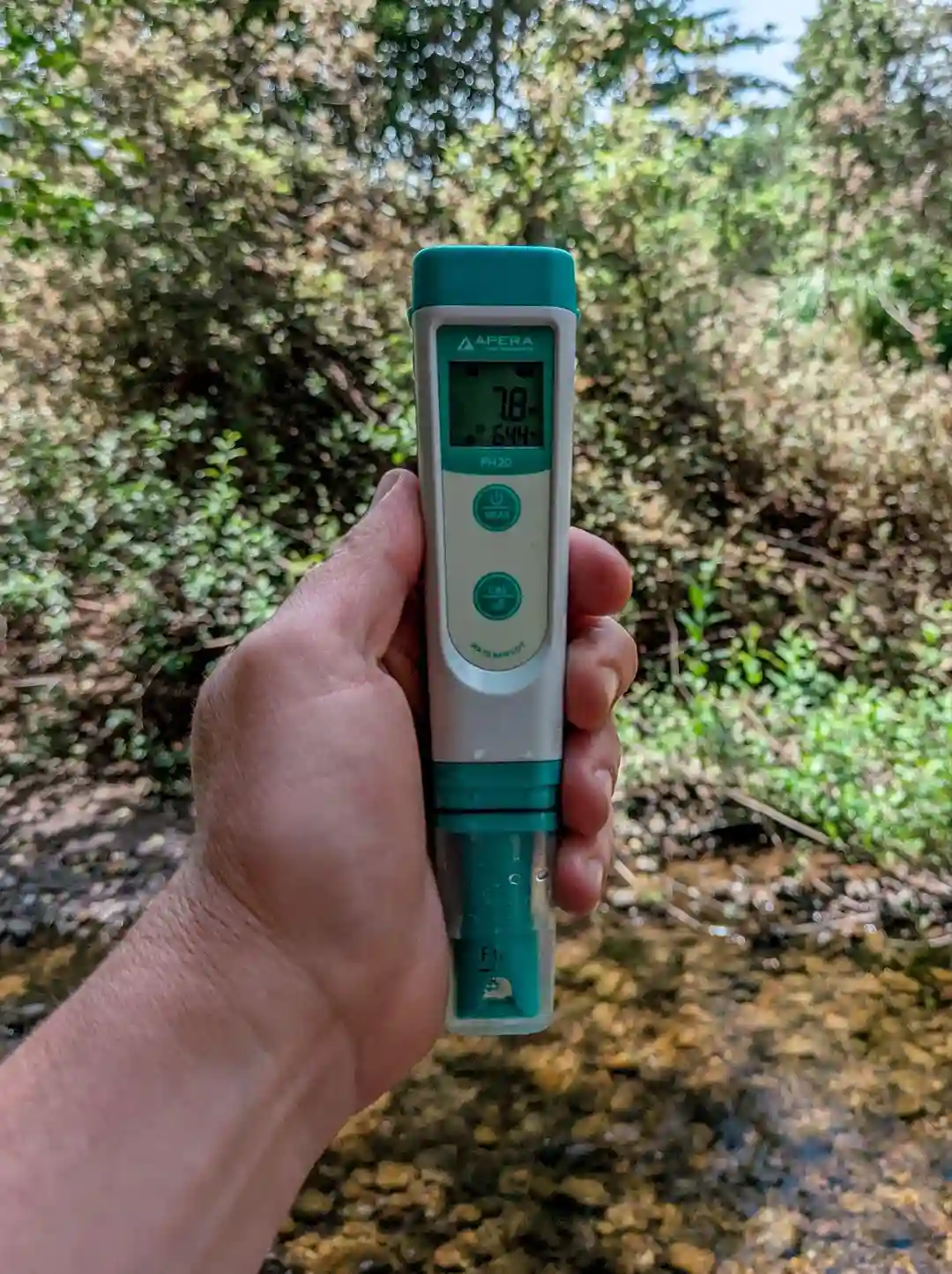
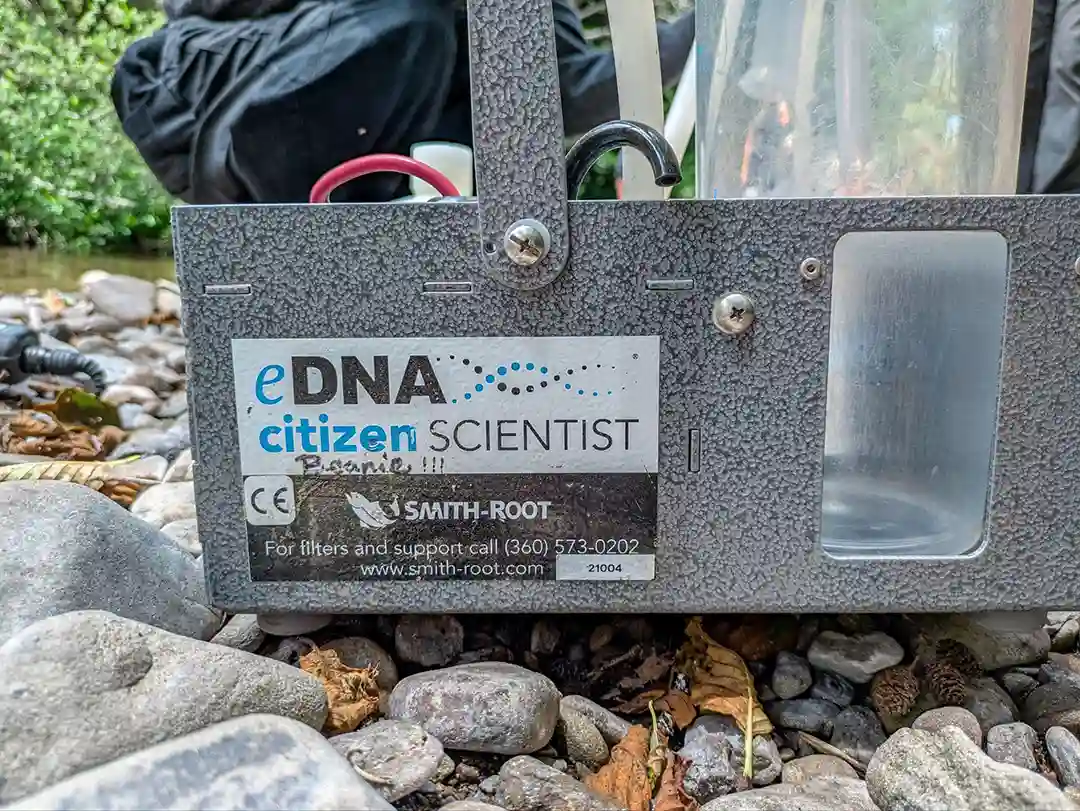
The equipment is specific: a portable filtration pump, collection vials, tubing, blue nitrile gloves. Keana set it up on the gravel while the group watched, then walked them through the collection. Several guests took turns with the sampling, and by the time they finished, we had six sealed samples from different points along the stream, each ready for the CALeDNA lab.
We have restored nearly 20 miles of salmon-bearing streams across the Usal property over two decades. Coho salmon, under sustained pressure across California's coastal watersheds, were confirmed returning to South Fork Usal Creek by California Department of Fish and Wildlife biologists in spring 2025. The eDNA results from the June tour will tell us which species are present right now in this section of the watershed, and we will share those results with the group once they come back from the lab.
Hunter, an outdoor and wildlife photographer who joined the tour, reviewed: "The past couple days out here was a blast. Getting a deeper understanding of what Redwood Forest Foundation is doing out in one of the most unique sections of the Northern California Coastline."
Dr. Gordon Walker described it as "a super fun experience to chat with other creators while learning about the awesome work that Redwood Forest Foundation is putting into restoration of the land, waterways, and wildlife," and said he was looking forward to coming back when mushroom season peaks.
USAL FOREST IS HERE FOR YOU TO EXPLORE AND SUPPORT
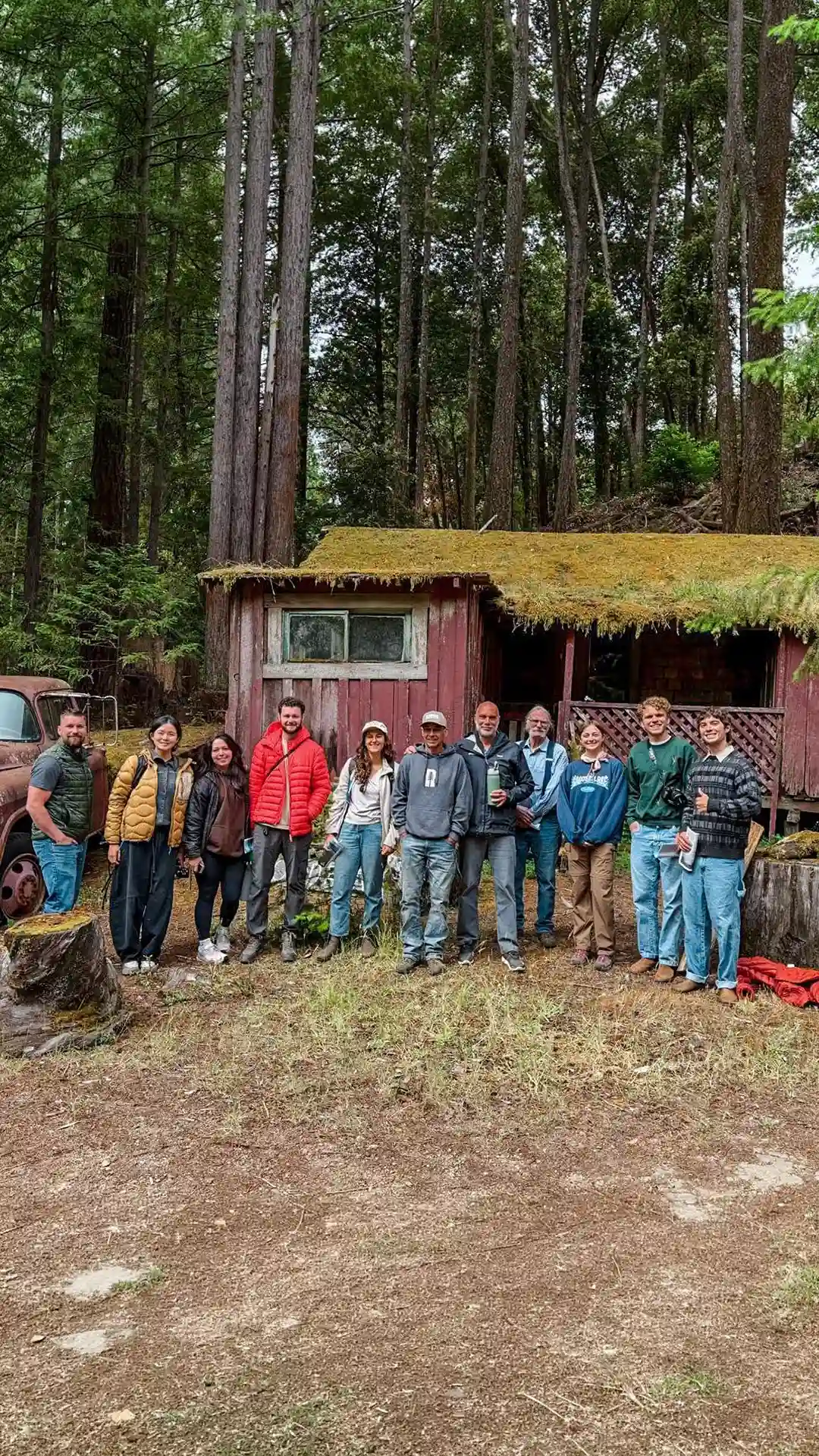
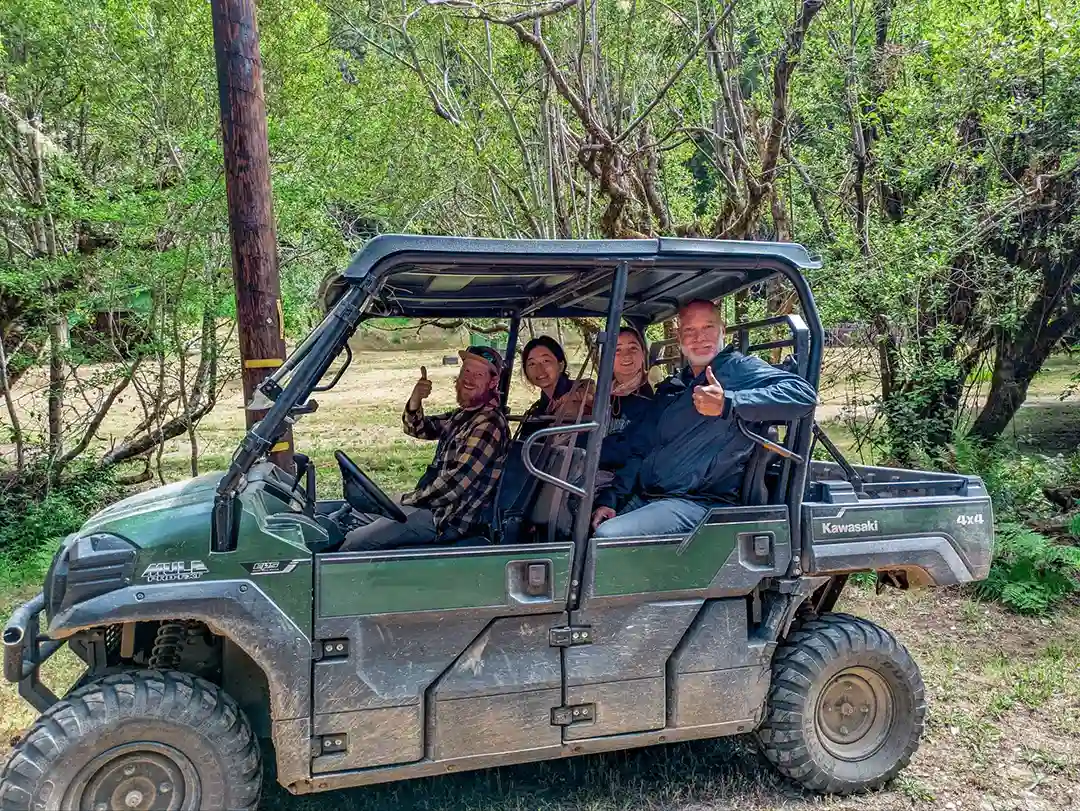
The restoration work described in this piece is happening right now, across 50,000 acres on California's Mendocino Coast, and there are two ways to be part of it.
If you want to get into the redwoods in person, our guided ATV tours at Usal run weekly from Fort Bragg, with the same field team, the same trails the group walked in June, and a full day inside the forest interior. Book your spot at redwoodforests.org/atv-tour.
If you want to support the work directly, from the stream surveys and sensor network to the 250,000 native redwoods planted so far, you can do that at redwoodforests.org/ways-to-give.
FAQ - Frequently Asked Questions
What makes Usal Redwood Forest the "smartest" forest in California?
Usal earns that description from what sits inside 50,000 acres of recovering coast redwood forest on the Mendocino Coast. Redwood Forest Foundation runs a full sensor network across the property: 23 AI-enabled wildlife cameras, 10 Song Meters recording bioacoustics, MOTUS telemetry tracking tagged wildlife movement, soil sensors and dendrometers measuring tree growth, and eDNA sampling in the streams. Drone and GIS mapping ties it together. Every reading feeds decisions about where restoration work goes next.
What is eDNA sampling and how does RFF use it to track wildlife?
Environmental DNA, or eDNA, is genetic material organisms leave behind in water. Scales, shed tissue, and other biological traces drift through a stream long after the animal that shed them has moved on. A water sample, filtered through the right membrane and processed in a lab, can identify every vertebrate species present in that stretch of stream over the past several days. No traps. No nets. No physical contact with the animal. In June 2026, RFF worked with Keana Wolcott of CALeDNA, California's statewide environmental DNA biodiversity program, to collect six samples from a Usal property stream, now processing at the CALeDNA lab.
Have coho salmon returned to Usal Redwood Forest's streams?
Yes. California Department of Fish and Wildlife biologists confirmed coho salmon returning to South Fork Usal Creek in spring 2025, the first confirmed return since 2013. RFF's role has been the two decades of restoration that built the conditions for that return: nearly 20 miles of salmon-bearing streams restored across the property, with sediment removed and stream structure rebuilt. The Smart Forest sensor network, including eDNA sampling, now monitors the same watershed going forward.
How much biodiversity has been documented at Usal Redwood Forest?
On a single morning walk in June 2026, outside of peak mushroom season, mycologist Dr. Gordon Walker identified 20 species in the forest floor understory, including Yellow Fairy Cups, the rare parasitic Gnome Plant, Redwood Sideband Snails, and Banana Slugs. That one walk is a small sample of what the property supports across 50,000 acres of recovering habitat, built on 250,000 native redwoods planted and nearly 20 miles of restored stream.
Can the public visit Usal Redwood Forest to see this restoration work firsthand?
Yes. Redwood Forest Foundation runs guided ATV tours at Usal weekly, departing from Fort Bragg. The tour covers the same trails and forest interior sections used for research and monitoring, led by the same field team, over a full day inside the forest. Tours run $250 per person with a two-guest minimum and include a boxed lunch, booked at redwoodforests.org/atv-tour.