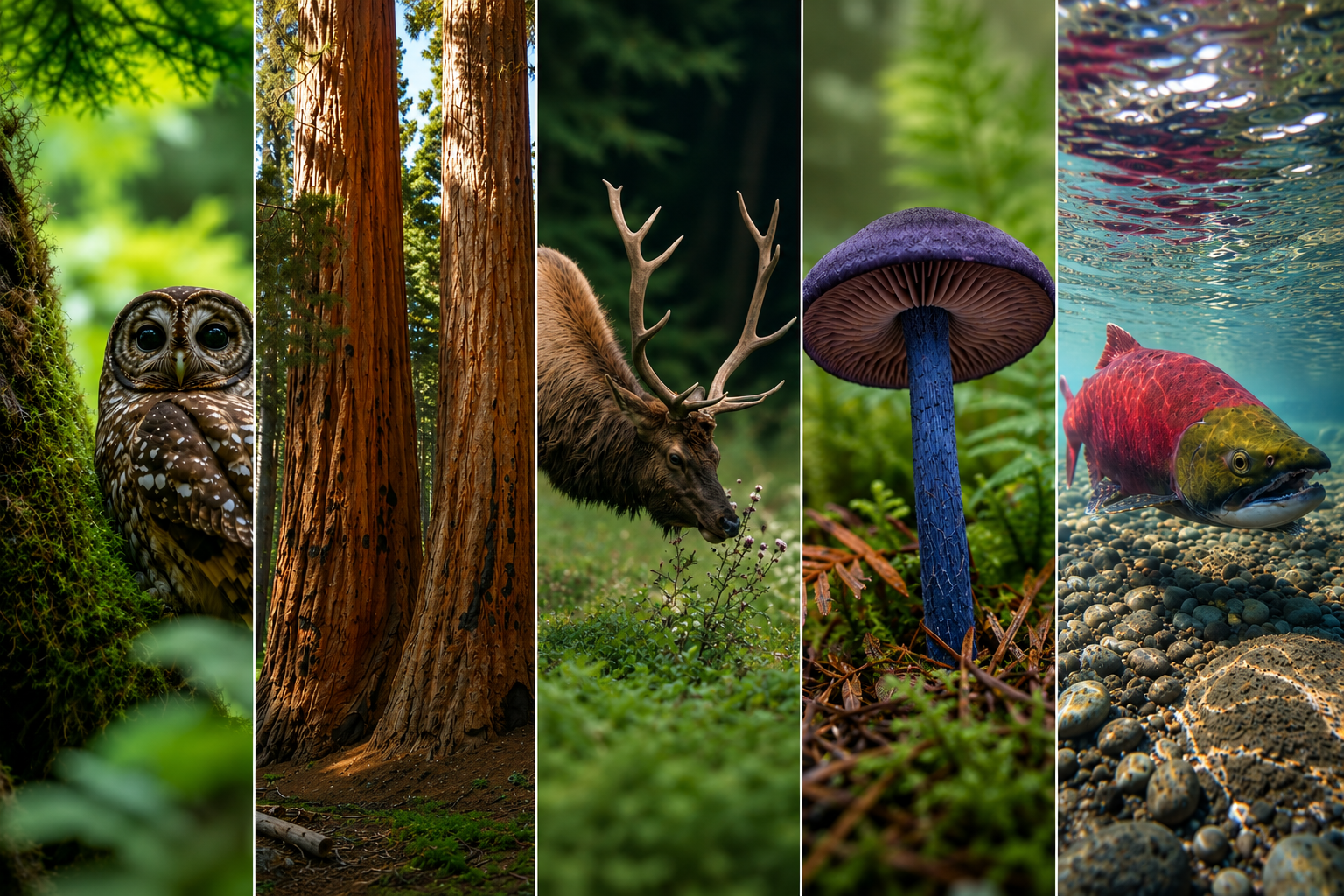
Northern California holds more old-growth coast redwood than anywhere else on Earth, and most visitors see a fraction of it. The popular parks are well documented. What gets less attention is how different each grove actually is, in terms of scale, forest character, access, and what surrounds it. This guide covers five of the most distinct redwood groves across the region, plus one on the Mendocino Coast that sits inside a 50,000-acre working conservation forest and offers something the state parks cannot.
Why Redwood Groves Feel Different From Each Other
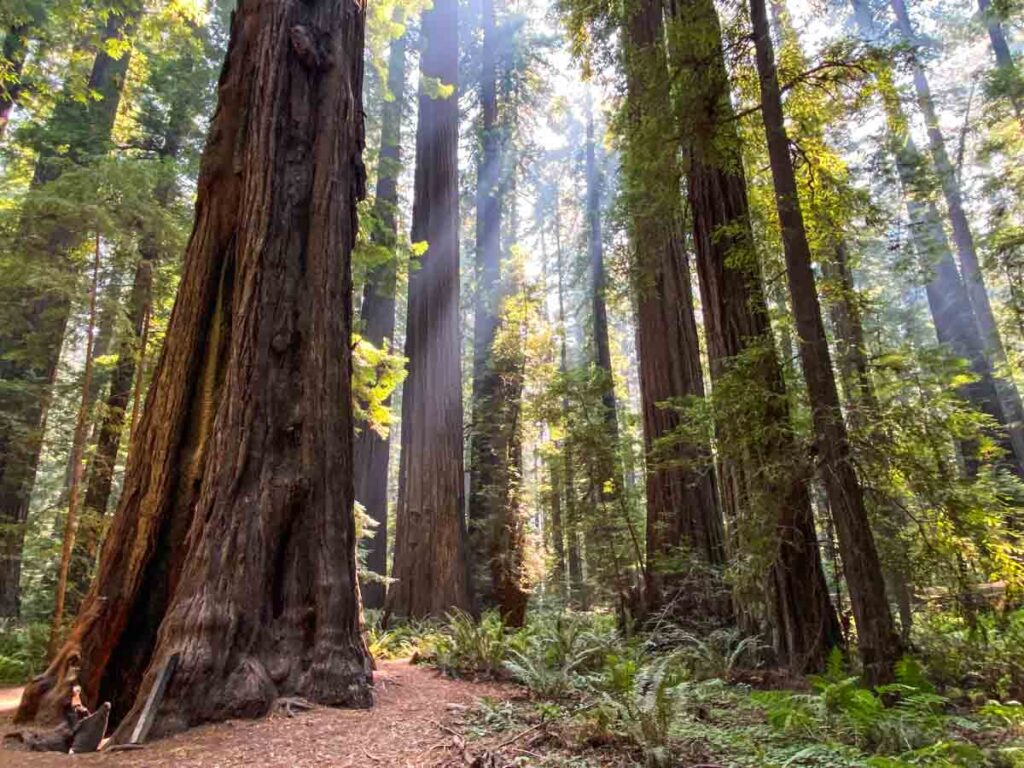
Coast redwoods (Sequoia sempervirens) grow along a narrow band of fog-influenced coastline that stretches roughly 450 miles from Big Sur to the Oregon border. Within that range, individual groves vary considerably. Some are easily accessible by paved paths. Others require a short drive down unpaved roads. Some sit inside heavily visited state parks; others are managed by private conservancies with controlled access.
The character of a grove is also shaped by what surrounds it. A grove inside a managed working forest, where roads have been decommissioned and stream corridors are actively replanted, will look and feel different from one that exists inside a protected park with no timber history. Both are worth visiting. They are different things.
01. Montgomery Woods State Natural Reserve, Mendocino County
Montgomery Woods is consistently listed among the groves containing the tallest known trees on Earth, and it remains one of the least crowded redwood destinations in the state. The reserve sits about 13 miles northeast of Ukiah, along a two-lane road through second-growth forest.
The main trail is a 2.5-mile loop that passes through five distinct old-growth groves along Orr Creek. The canopy here is dense enough to feel like a different atmosphere. Tree identification in Montgomery Woods tends to pull serious naturalists; this is not a scenic overlook, it is a functioning old-growth stand that happens to be accessible.
Best for: visitors who want genuine old-growth immersion without crowds. Trail type: easy loop, mostly flat. Parking is limited, which keeps the volume down.

02. Armstrong Redwoods State Natural Reserve, Sonoma County
Armstrong is the most accessible old-growth redwood grove in Sonoma County, and possibly in the entire state. It sits at the edge of Guerneville, less than two hours from San Francisco, which makes it the practical entry point for Bay Area visitors who want to see coast redwoods without a full-day commitment.
The Colonel Armstrong Tree, estimated at over 1,400 years old, is the anchor. The main trail is flat, paved in sections, and works for visitors of all ability levels. Armstrong fills up on weekends. Arriving before 9 a.m. makes a notable difference.
Best for: first-time visitors, families, visitors with limited mobility. Trail type: flat, well-maintained, easy.
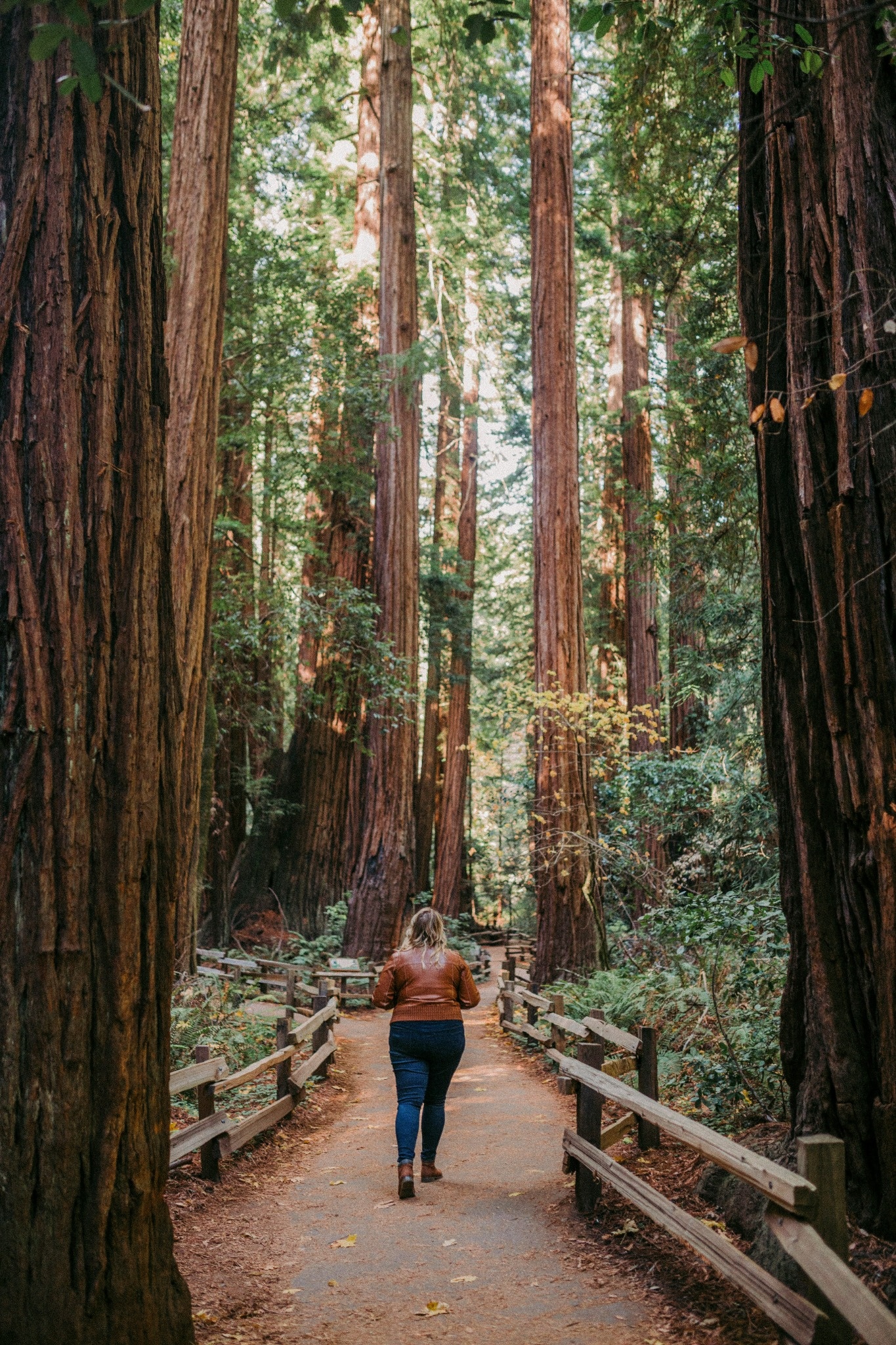
03. Founders Grove, Humboldt Redwoods State Park
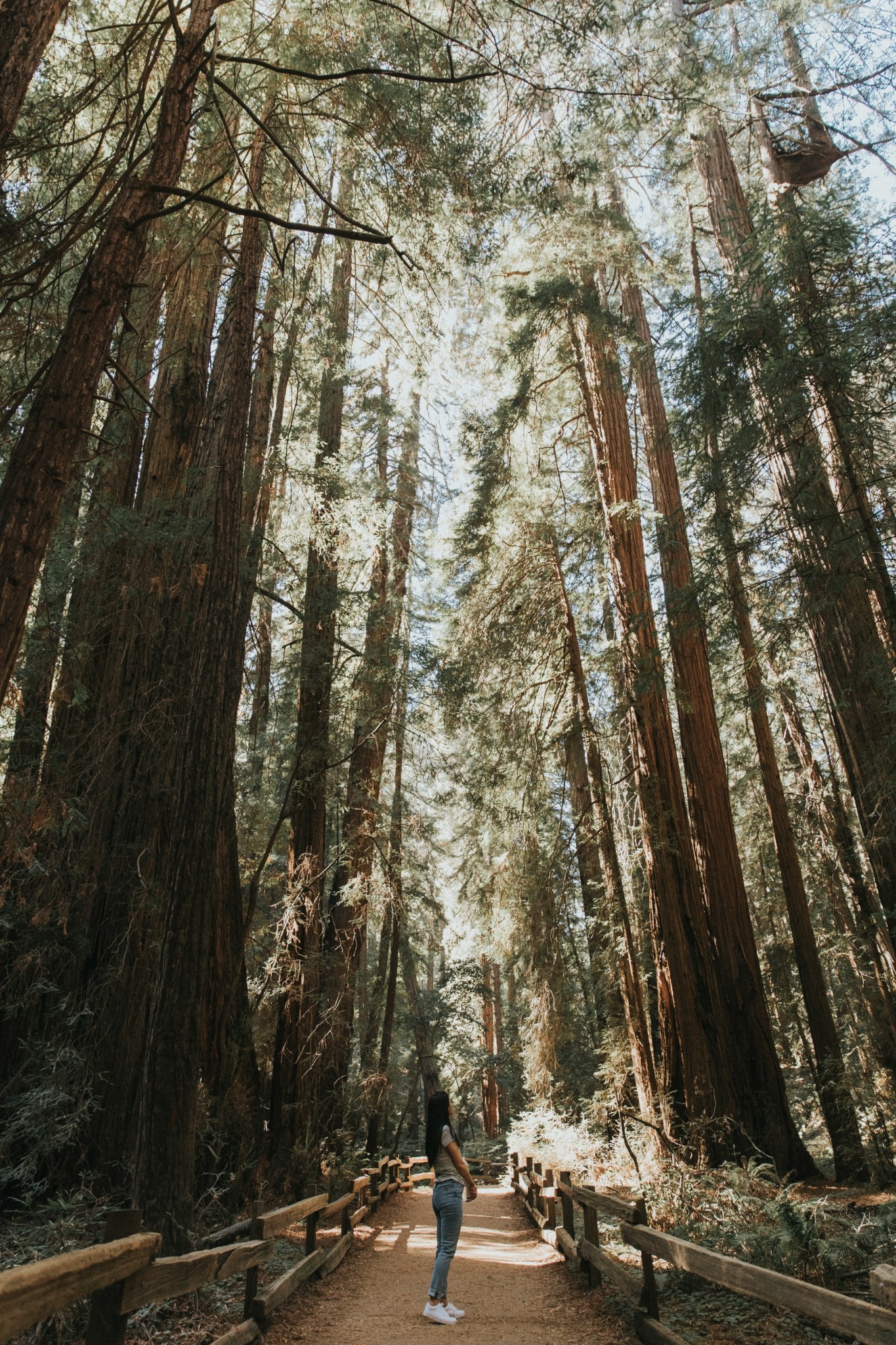
Humboldt Redwoods covers over 51,000 acres and contains the largest remaining contiguous old-growth coast redwood forest in the world. Founders Grove, located along the Avenue of the Giants, is the most visited section, and for good reason. The Dyerville Giant, which fell in 1991 and still measures over 360 feet lying on the forest floor, gives a sense of scale that standing trees alone do not convey.
The loop trail is short (under a mile) and sees heavy foot traffic. It serves as a reliable orientation to what mature redwood forest looks like before visitors explore deeper into the park.
Best for: visitors driving the Avenue of the Giants route; accessible classic redwood experience. Trail type: short loop, easy.
04. Prairie Creek Redwoods State Park, Humboldt County
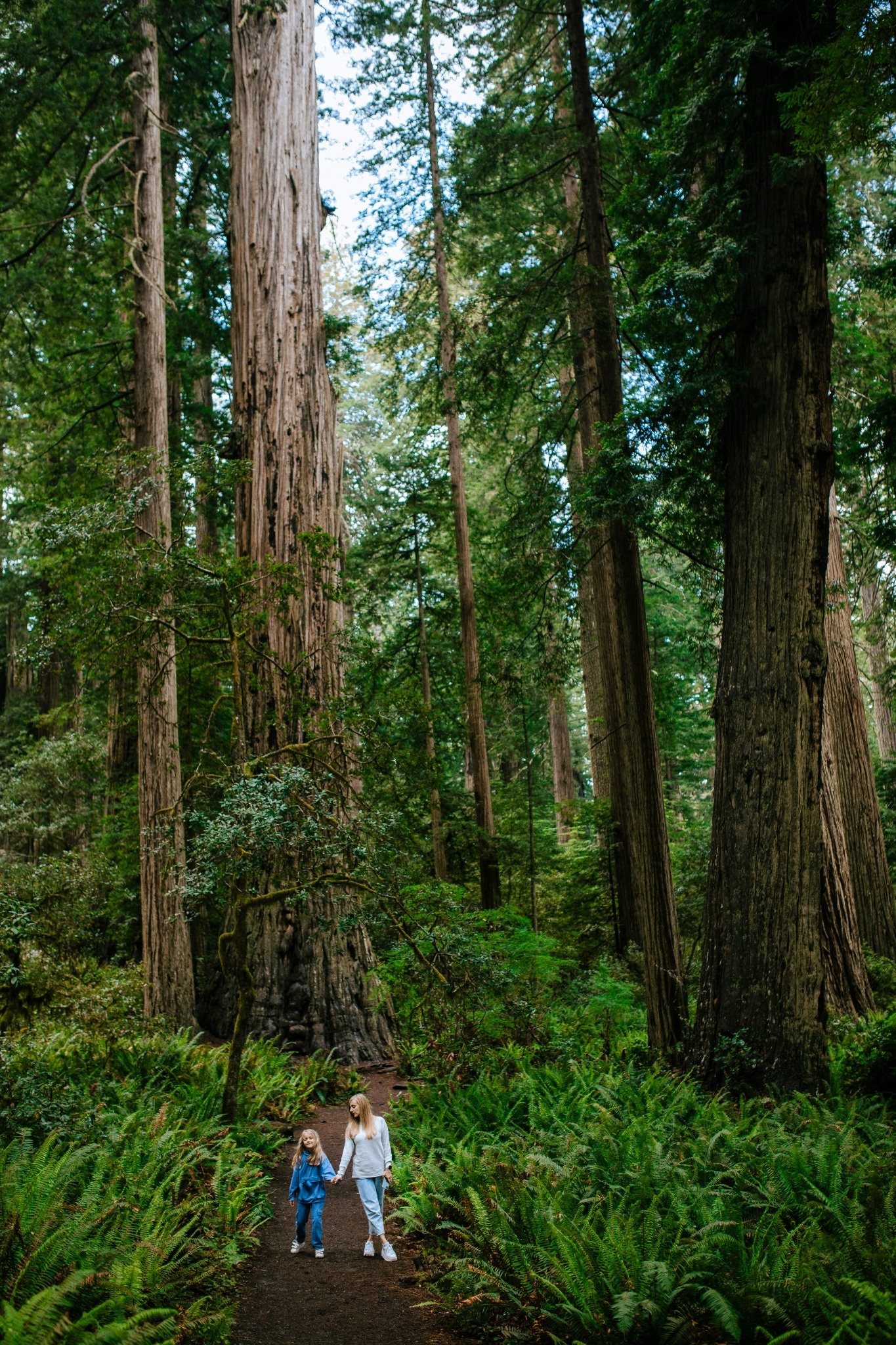
Prairie Creek is where the redwood forest opens into something broader. Elk meadows run along Davison Road, and Roosevelt elk are a consistent presence. The park's trail network includes both old-growth forest and coastal access via Gold Bluffs Beach and Fern Canyon, a short slot canyon whose fern-covered walls have appeared in several films.
The combination of old-growth redwoods, open meadow, and coastal terrain makes Prairie Creek the most ecologically varied of the major redwood parks. It rewards visitors who are willing to spend most of a day there.
Best for: visitors who want redwoods alongside wildlife and coastal access. Trail type: multiple options, easy to moderate.
05. Usal Redwood Forest, Mendocino Coast
Usal sits at the southern end of the Lost Coast, roughly three hours north of San Francisco by coastal route. It is not a state park. Usal Redwood Forest is 50,000 acres of private conservation land managed by the Redwood Forest Foundation, and access is currently available through a guided ATV tour that runs through old-growth and second-growth forest on a working timber property.
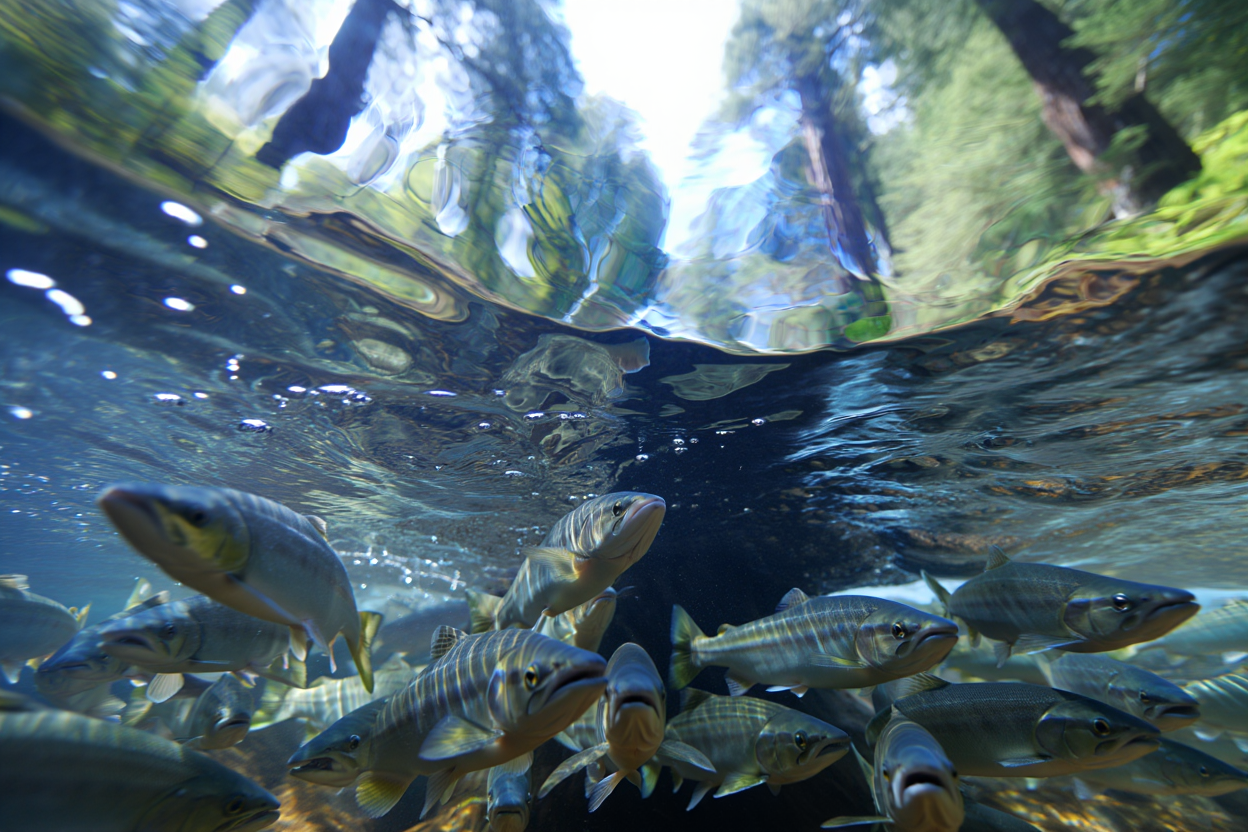
What makes Usal different is the surrounding context. The forest is actively managed under an FSC-certified timber plan, which funds the conservation work happening alongside it: 250,000 native redwoods planted since 2007, 20 miles of streams restored for salmon and steelhead, road decommissioning that has reduced sediment entering the creek system, and cultural fire partnerships with Wailaki burn practitioners working across the property.
The ATV tour runs approximately 2.5 hours and covers terrain that no hiking trail accesses. In April 2025, California Department of Fish and Wildlife biologists confirmed coho salmon fry in South Fork Usal Creek for the first time since 2013, a milestone that follows over a decade of watershed restoration. Visitors to Usal are seeing a forest in the middle of that work.
Best for: visitors who want to understand what redwood conservation actually looks like on the ground.

How to Choose the Right Grove for Your Trip
The five state parks on this list are all worth visiting, and they cover a wide range of travel distances from the Bay Area. Armstrong and Montgomery Woods are within a half-day's drive. Prairie Creek requires a longer commitment. Founders Grove works well as a stop on the Avenue of the Giants route.
Usal works best as the destination itself, rather than a stop on a longer route. The Mendocino Coast is a full trip, and Usal is a reason to make it.
If you are planning a visit focused primarily on understanding how redwood forests are managed and restored, Usal is the only option on this list where that question is answered directly on the ground.
FAQ - Frequently Asked Questions
1. What is the best redwood grove near San Francisco?
Armstrong Redwoods State Natural Reserve in Guerneville is the closest major old-growth grove to San Francisco, around 80 miles and under two hours by car. If you want to go further and see redwood conservation actually working on the ground, Usal Redwood Forest on the Mendocino Coast is worth the extra drive. It is the only grove on this list where you can tour an active 50,000-acre working forest with a guide.
2. What is the best redwood forest experience in Northern California?
For visitors who want more than a walk through trees, Usal Redwood Forest offers something the state parks cannot. The guided ATV tour covers old-growth and second-growth forest across a 50,000-acre conservation property on the Mendocino Coast, with a guide who can speak to what the forest is, how it is managed, and what is being restored. Book at redwoodforests.org/atv or call 707-813-1704.
3. Are any redwood groves open year-round?
All five state parks on this list are open year-round, though some facilities operate on seasonal schedules. Usal Redwood Forest ATV tours run on a scheduled basis; visit redwoodforests.org/atv or call 707-813-1704 to check current availability.
4. What is the difference between coast redwoods and giant sequoias?
Coast redwoods (Sequoia sempervirens) are the tallest trees on Earth by height, found in a coastal fog belt from Big Sur to southern Oregon. Giant sequoias (Sequoiadendron giganteum) grow in the Sierra Nevada and are the largest trees by volume. Every grove in this guide is coast redwood.
5. Can you see wildlife at redwood groves in Northern California?
Prairie Creek Redwoods State Park has the highest probability of Roosevelt elk sightings. At Usal, the creek restoration work has brought coho salmon back to the watershed after a decade of absence. In April 2025, California Department of Fish and Wildlife biologists confirmed coho fry in South Fork Usal Creek for the first time since 2013.
6. How long should I plan for a redwood grove visit?
Armstrong and Founders Grove can be experienced in one to two hours. Prairie Creek and Jedediah Smith reward a full day or more. The Usal ATV tour runs approximately two and a half hours and covers terrain that no hiking trail accesses.