April 24, 2026
Well-being
THE SIMPLEST MENTAL HEALTH PRACTICE IS WALKING IN A FOREST

April 24, 2026
Walking slowly through a forest, with no destination and no schedule, is one of the most effective things a person can do to reduce stress, lower the hormones that keep the body in a constant state of alert, and return the nervous system to something closer to how it was designed to function. The research behind this is substantial, spanning decades and multiple countries, and it consistently points to the same conclusion: the forest itself is doing something to the human body that no amount of walking on a sidewalk or sitting in a park can replicate. You do not need a program or a prescription to access it. You need a forest and about an hour of your time.
Most people who have spent even a short stretch of time walking through trees have noticed something shift. Breathing slows down. The shoulders drop. The mental noise that runs through the background of a normal day gets a little quieter. That feeling is not imagined, and it is not just the result of "getting fresh air" in some vague sense. Researchers have been measuring what actually happens inside the body during and after forest walks for more than twenty years now, and what they have found is specific enough to change how you think about something as ordinary as a walk in the woods.
The practice has a name in Japan. Shinrin-yoku, which translates literally to "forest bathing," was introduced in 1982 by Japan's Ministry of Agriculture, Forestry, and Fisheries as a form of preventive health care. The idea was simple and grounded in observation: people who spent regular time in forests seemed to be healthier, and the government wanted to know if that observation held up under clinical measurement.
It did. Over the following decades, researchers conducted field experiments across 24 forests in Japan, sending participants to walk in both forested and urban environments while tracking salivary cortisol, blood pressure, pulse rate, and heart rate variability. The results were remarkably consistent across every site. Forest walking produced lower cortisol, lower blood pressure, a slower pulse, and a measurable increase in parasympathetic nervous system activity, which is the part of your nervous system that governs rest and recovery. Urban walking did not produce the same changes, even when the physical effort was identical. The walks lasted about fifteen minutes.
Cortisol is the hormone your body produces under stress. In small doses and short windows it is useful, but the problem most people living in cities face is that cortisol stays elevated for far longer than the body was designed to sustain. Over weeks and months, that chronic elevation contributes to anxiety, disrupted sleep, weakened immune response, and the kind of mental fog where you feel busy all day but cannot remember clearly what you actually accomplished.
A meta-analysis published in 2019 reviewed 22 separate studies on forest bathing and cortisol and found that salivary cortisol levels were significantly lower in people who spent time in forests compared to those in urban settings. What was interesting about the findings is that the cortisol difference appeared even before participants started walking, which suggests that simply being present in a forest environment begins to shift stress hormone levels on its own.
A more recent study, published in Scientific Reports in 2025, took this a step further by measuring cortisol in hair samples rather than saliva. Hair cortisol reflects chronic stress accumulated over the preceding month, which gives a more complete picture than a single saliva sample taken on a particular afternoon. Older adults who walked in a forest twice a week for one month showed a significant reduction in hair cortisol compared to the month before the intervention began. The group who walked the same amount in an urban environment did not. This is one of the first studies to show that the effect of forest walking on stress hormones compounds over time rather than just appearing and disappearing within a single session.
There is a detail in the research that surprised me when I first encountered it, and it changes the way you think about what a forest actually is.
Trees release organic compounds called phytoncides. These are volatile oils that function as part of the tree's defense system against insects and microbial disease, and they are present in forest air at concentrations you can sometimes smell, particularly in conifer and old-growth forests where canopy density traps moisture and keeps the air still. When you walk through a forest and breathe that air in, you are inhaling these compounds, and your immune system responds to them in a measurable way.
Research led by Dr. Qing Li at Nippon Medical School in Tokyo has documented this response across multiple studies. Subjects who spent time in forested environments showed significantly increased activity of natural killer cells, which are the part of the immune system responsible for identifying and eliminating virus-infected cells and cells that have begun to behave abnormally. The increase in natural killer cell activity lasted for more than seven days after the forest trip ended, and it was accompanied by a simultaneous drop in adrenaline and noradrenaline, the hormones that keep the body in its alert, fight-or-flight state.
The researchers then tested whether the effect was driven by phytoncides specifically or by the broader experience of being outdoors. They vaporized tree essential oils in a hotel room and measured the immune response of subjects who slept there. The same increase in natural killer cell activity occurred. The compounds from the trees, independent of sunlight or scenery or exercise, produced a direct biological change in immune function. A 2024 meta-analysis confirmed this pattern across multiple studies, reporting a statistically significant increase in natural killer cell activation from phytoncide exposure in both forest and controlled clinical settings.
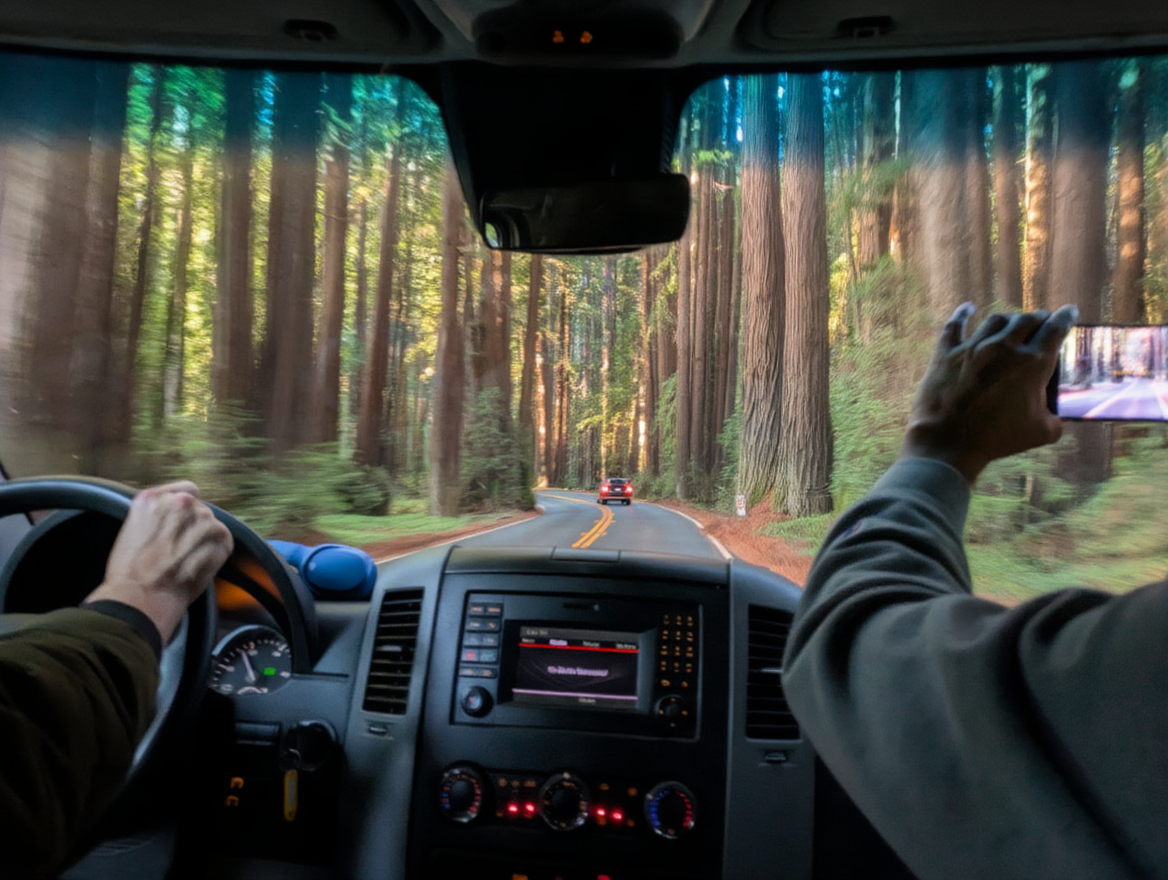
Coast redwood forests are a particularly strong environment for this kind of exposure. The canopy in old-growth redwood stands is dense enough to keep the air cool and enclosed even on warm days, and the high moisture levels along the northern California coast mean the air holds these compounds close to the ground where people walk and breathe. At Usal Redwood Forest on the Mendocino Coast, where the Redwood Forest Foundation manages 50,000 acres of coast redwood, the old-growth canopy creates conditions that feel physically different the moment you step under the trees. The air is heavier, cooler, and still in a way that urban air never is.
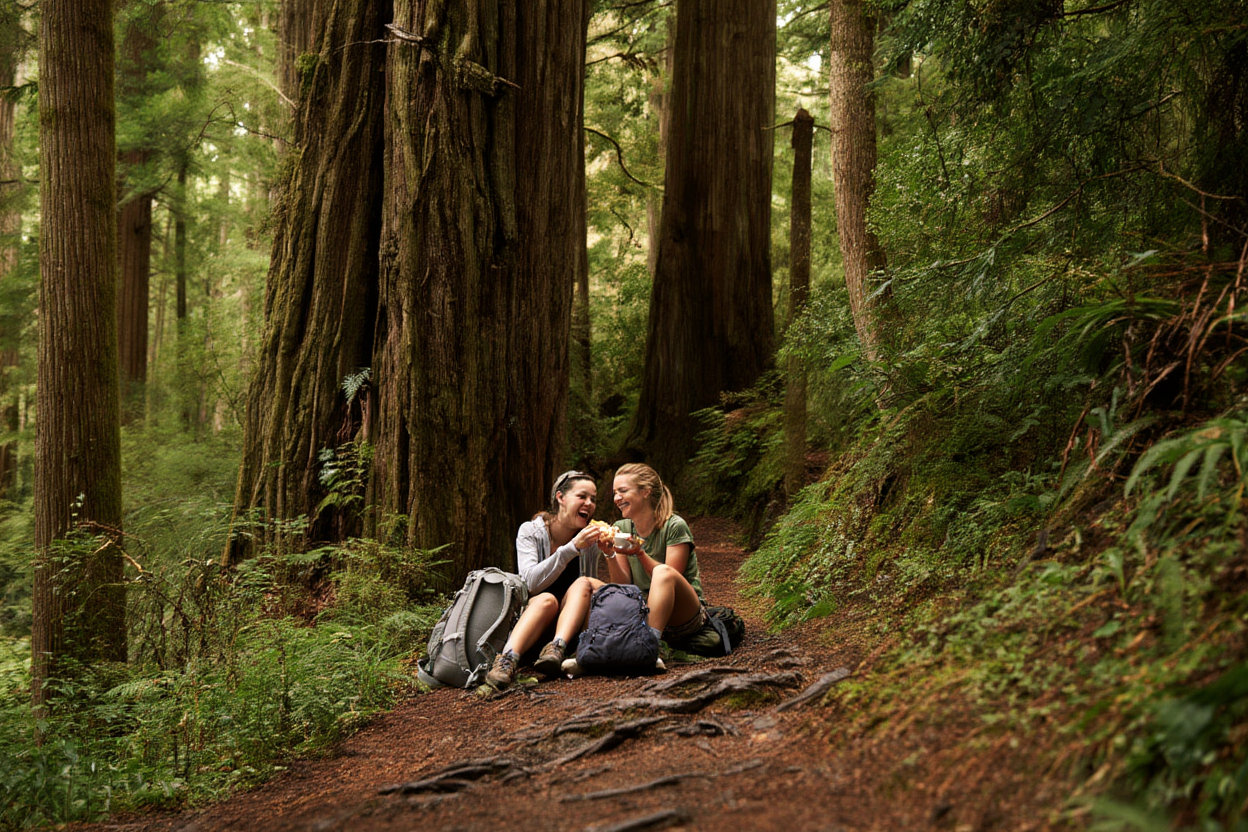
Your autonomic nervous system operates in two modes. The sympathetic mode is the one that accelerates heart rate, tightens muscles, sharpens focus, and prepares you to deal with a threat. The parasympathetic mode is the one that slows the heart, relaxes digestion, and allows the body to repair and recover. In a well-functioning system, these two modes alternate naturally throughout the day. The problem is that modern life keeps most people locked into sympathetic activation for hours at a time, sometimes for entire days, with very few environments or experiences that allow the parasympathetic system to take over.
A forest is one of those environments. Heart rate variability data from the Japanese field experiments showed that parasympathetic activity increased significantly within the first fifteen minutes of a forest walk, while sympathetic activity decreased. A 2024 study conducted in Italy's Casentino Forest confirmed the same shift, documenting improved autonomic balance and reduced hormonal stress markers after participants spent two days immersed in a forested setting.
In practical terms, this means the things that most people describe as "feeling stressed," the tightness in the chest, the racing thoughts that will not settle, the difficulty falling asleep at the end of a day, are expressions of a nervous system that has been running in its alert mode for too long without a chance to reset. Walking slowly through a forest, without a schedule or a destination, is one of the fastest and most reliable ways to give the parasympathetic system room to do what it already knows how to do. You do not have to learn a technique. You just have to be in the right place at a slow enough pace for your body to recognize what is happening around it.
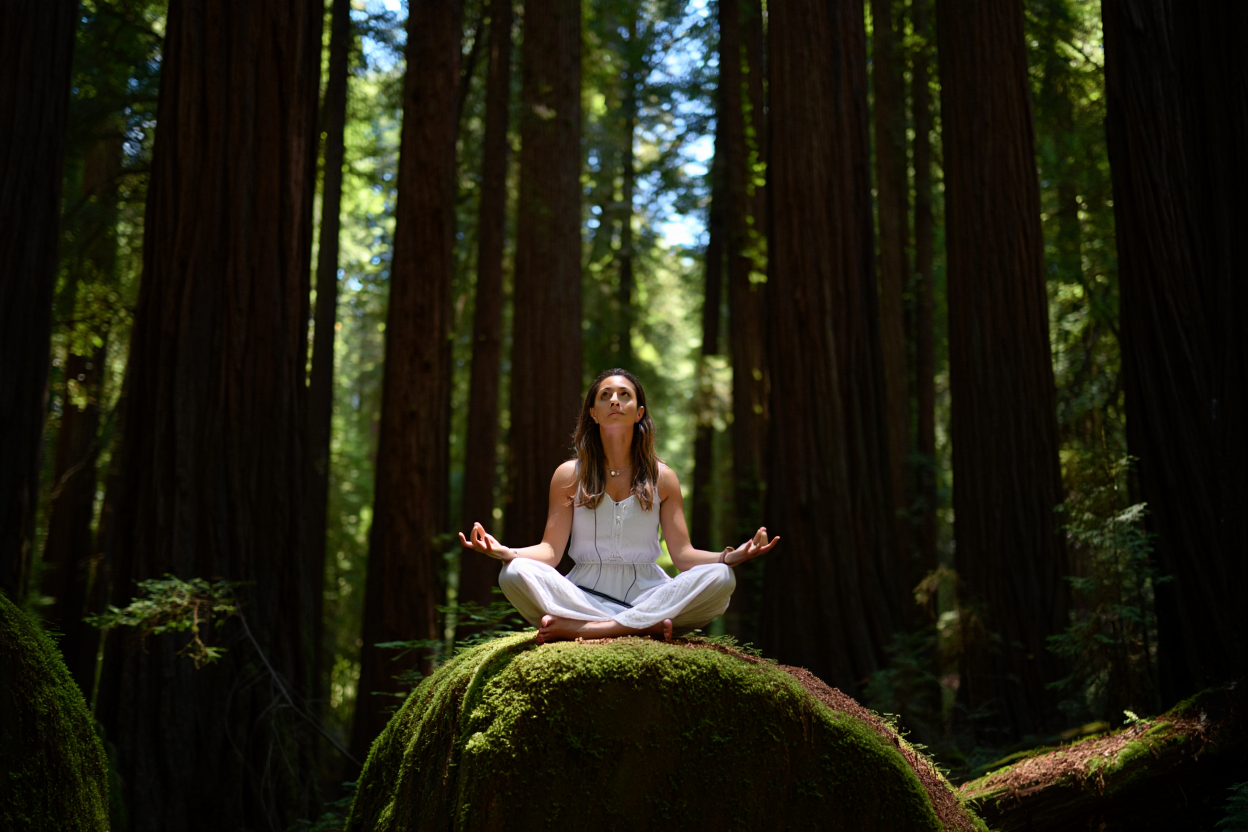
A randomized controlled trial published in January 2025 compared forest walking and urban walking head to head, measuring mucosal immunity through secretory immunoglobulin A, which is one of the body's primary defenses in the respiratory and digestive systems. After controlling for baseline levels and total physical activity, the forest walking group showed a significant increase in this immune marker while the urban walking group showed a decrease. The forest group also showed a significant rise in dopamine and a significant drop in plasma cortisol.
This finding is worth sitting with for a moment. The amount of walking was the same. The physical effort was the same. The only variable was the environment, and it produced opposite outcomes in immune function. The forest is doing something the sidewalk cannot, and the difference is not about fresh air in some generic sense. It is about what the air contains, what the environment signals to the nervous system, and how the body responds when it recognizes that it is in a place where it can stand down.
One of the most useful things about this research is how little it takes to see the effect. A fifteen-minute walk in a forested area is enough to produce measurable changes in cortisol and heart rate variability. Two walks per week over the course of a month are enough to reduce chronic stress hormones at a level that shows up in hair analysis. You do not need to go backpacking for a week or commit to a guided retreat, although those things have their own value. The entry point is a walk among trees.
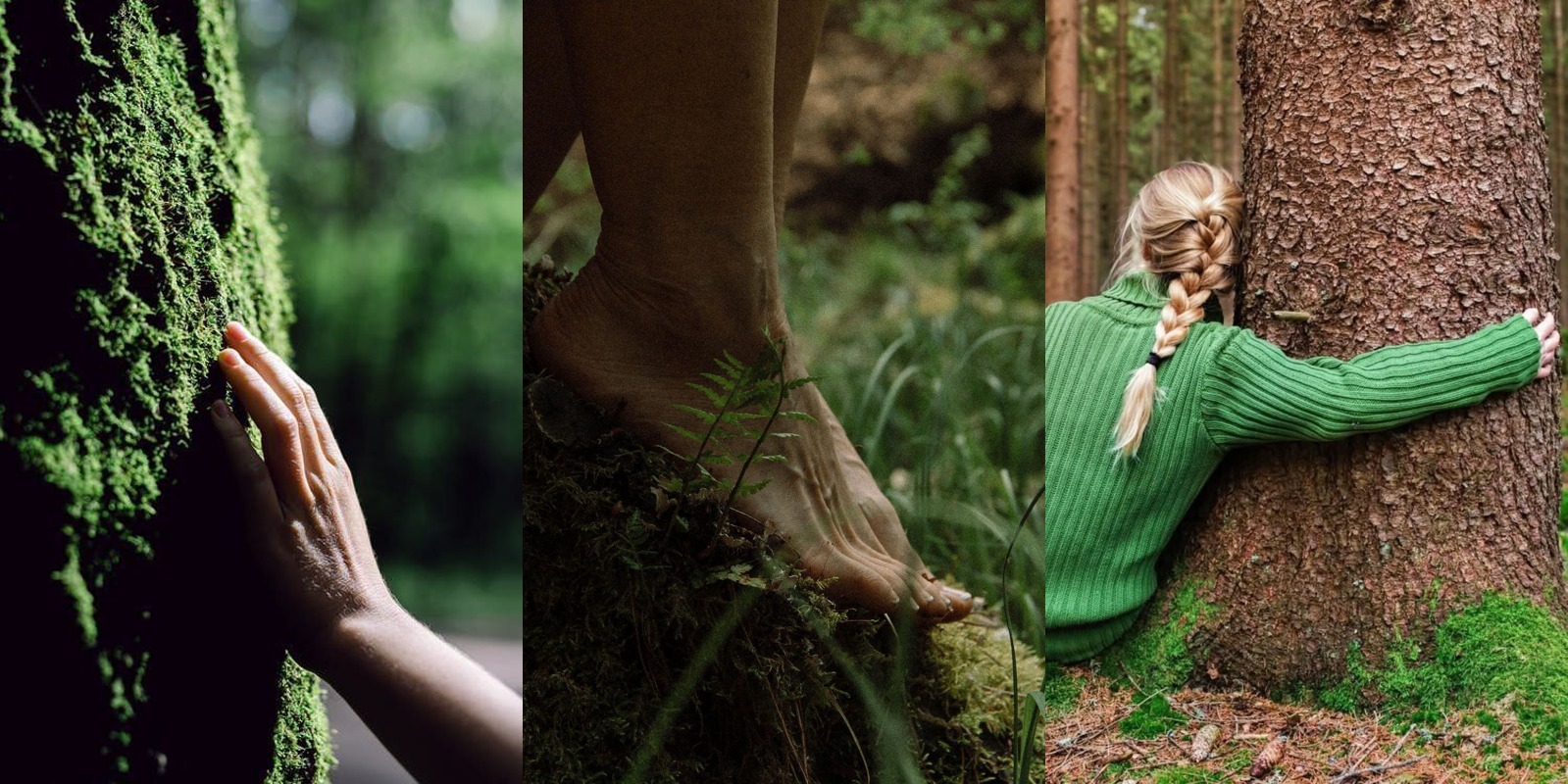
What matters is pace and attention. Forest bathing as a practice is distinct from hiking because the point is not distance or exertion. It is slow movement with sensory awareness. You notice the temperature of the air changing as you move deeper into canopy. You hear water running somewhere below the trail before you see it. You feel the texture of bark without thinking about why you are touching it. You watch light shift as it travels through hundreds of feet of canopy above you and lands unevenly on the ground. That kind of attention is what helps the nervous system transition out of its alert state, and it does not require any training or instruction to practice. It just requires slowing down enough to let your senses do what they already know how to do.
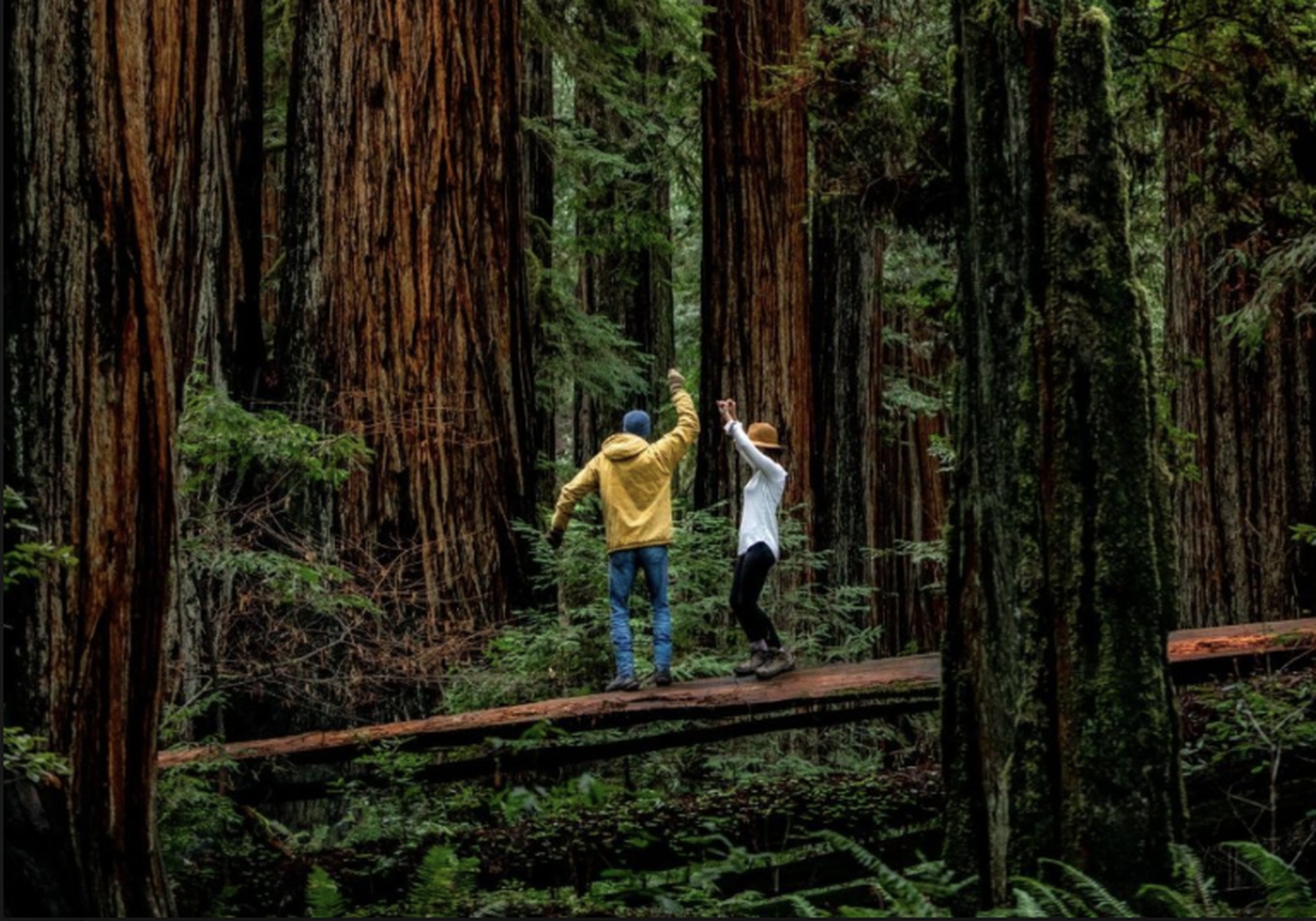
If you are anywhere in the San Francisco Bay Area or Northern California, you are within a few hours of some of the best forests on Earth for this kind of practice. Coast redwood forests are uniquely suited to it because of the density of canopy, the moisture held in the air year-round, the stillness created by thousands of years of unbroken growth, and the sheer scale of the trees, which produces a quality of quiet that people consistently describe as something they can feel physically.
Usal Redwood Forest on the Mendocino Coast is where we do our work. It is 50,000 acres of coast redwood managed by the Redwood Forest Foundation, and the old-growth stands here create an environment that is hard to describe until you have stood inside it. The light changes the moment you step under the canopy. The air is noticeably cooler and heavier. The trees here are hundreds of years old, some over a thousand, and the quiet is the kind that makes you aware of how much noise you have been carrying without realizing it. There is no cell service inside the forest, which means the single most common source of nervous system interruption is removed before you even start walking.
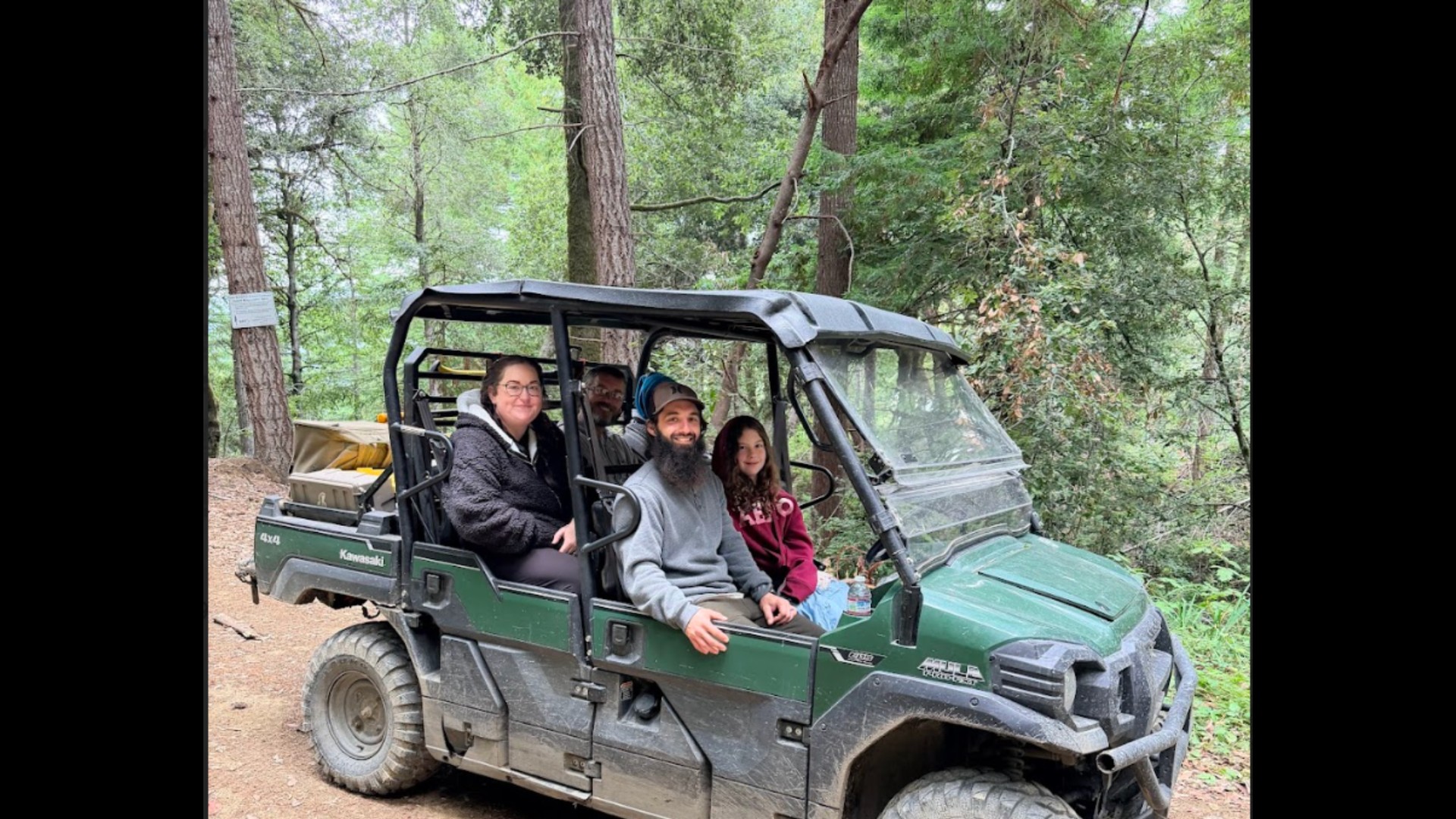
You can experience this forest on a guided ATV tour with Chris Watkins, which runs a full day from Fort Bragg and takes you through old-growth canopy, ridge overlooks with coastal views, and active restoration zones where cultural burns and reforestation are reshaping the landscape. The pace is unhurried, and the guides know the land well enough to stop at the places where the forest is doing its most interesting work. It is one of the few ways to access this much protected redwood on the Mendocino Coast.
Other coast redwood forests in Northern California worth visiting include Hendy Woods State Park near Philo, Montgomery Woods near Ukiah, and Prairie Creek Redwoods State Park in Humboldt County. Muir Woods is the most accessible from San Francisco, though it is often crowded enough to limit the kind of slow, quiet walking that makes the practice effective. Each of these forests offers old-growth canopy and the kind of cool, moist, enclosed air where phytoncide concentrations tend to be at their highest.
Human nervous systems developed over hundreds of thousands of years in environments where trees, water, soil, and animal sound were the constant backdrop. The stress response evolved to handle short, intense threats followed by long periods of recovery in natural settings where the parasympathetic system could restore baseline function. What most people live with today is the opposite pattern: low-grade chronic activation that never fully resolves, in environments that offer almost no signal to the nervous system that it is safe to stand down.
Walking in a forest is not a wellness trend or an alternative therapy. It is a return to the conditions the body recognizes as the ones where recovery happens. The research from Japan, Europe, and the United States confirms what any person who has walked through an old-growth redwood forest already senses: something about being among trees of that age and scale changes how the body feels, and the change begins faster and lasts longer than most people expect.
The simplest version of this practice is also the most complete. Find a forest with real canopy overhead. Walk slowly enough that you notice what is around you. Stay for an hour if you can. The body already knows what to do with that time. It has been waiting for the right environment to do it in.
Book a tour with Chris Watkins | (707) 813-1704 | chris@redwoodforests.org
Yes, and the effect is measurable within fifteen minutes. Time in a forest drops cortisol, slows heart rate, and shifts the nervous system out of its alert state in ways that urban walking does not, even at the same pace and distance. Researchers tested this across 24 forest sites in Japan and found the results consistent enough to build it into national health guidelines.
Fifteen minutes is where the data starts moving. An hour gives your nervous system enough time to fully settle. Visit twice a week over a month and the effect compounds, lowering chronic stress hormones at a level that shows up in lab results, not just how you feel walking out.
Phytoncides are the natural oils trees release into the air, the compounds behind that deep forest smell. Research found they increase immune cell activity and lower adrenaline, with the effect lasting more than a week after a single forest visit. Old-growth redwood forests with dense canopy hold these compounds close to the ground year-round, which is why the air at Usal feels noticeably heavier and cooler the moment you step inside.
Forest bathing, or shinrin-yoku, is slow, intentional time among trees with no destination and no pace target. Japan introduced it in 1982 as a preventive health practice after field research showed measurable drops in cortisol, blood pressure, and heart rate from walks as short as fifteen minutes. A 2025 controlled trial confirmed that forest walking and urban walking produce opposite outcomes in immune function, even when the distance and effort are identical.
Usal Redwood Forest on the Mendocino Coast is 50,000 acres of coast redwood managed by the Redwood Forest Foundation, including old-growth stands where the canopy has been growing uninterrupted for hundreds of years. There is no cell service inside the forest. Guided ATV tours with Chris Watkins take you through the old-growth at an unhurried pace. Book at redwoodforests.org/atv. Montgomery Woods near Ukiah and Hendy Woods near Philo are also strong options within a few hours of the Bay Area.
No. Hiking measures distance. Forest bathing measures nothing. The practice is slow movement with open sensory attention, noticing temperature changes, listening for water, watching light shift through canopy. That distinction matters because the research shows it is the slowing down and the environment, not the physical effort, that produces the changes in stress hormones and immune function.